The Mustang is Different
Starting a BLM mustang is not colt starting in the traditional sense. A domestically bred colt has been handled since birth — haltered, led, picked up, touched by humans. A freshly adopted BLM mustang may never have had a human touch it. The timeline, the techniques, and the mindset required to gentle and start a wild mustang are fundamentally different from anything in standard colt starting work.
That said, the mustang is one of the most rewarding horses a person can develop. The intelligence, survival instincts, and physical toughness that allowed these horses to survive in the wild translate directly into exceptional mental agility, natural athleticism, and remarkable soundness. The work to get there, though, is earned — not given.
The Gentling Phase — Before Training Can Begin
With a fresh wild mustang, the first goal is not training — it is simply acceptance of human presence without fear. This phase can take days or weeks depending on the individual horse's history, age, and temperament. The tools used in this phase are patience, consistency, pressure and release at extreme distance, and the complete absence of forced contact.
The horse must first decide that the human is not a predator. This is not something you can rush, trick, or shortcut. Every attempt to shortcut the gentling phase creates a horse that appears calm on the surface but has not truly accepted human presence — a horse that will explode unpredictably when pressure increases.
Key Phases in Mustang Starting
Phase 1: Approach and Touch (Days 1–21)
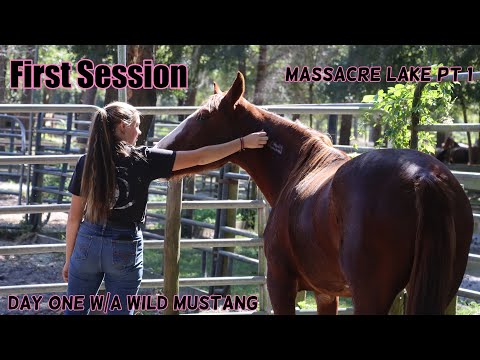
Working from a distance in a small pen, allow the horse to move, but use body language to direct its movement. Begin approaching only when the horse shows signs of lowering its head, softening an eye, or licking and chewing. Reward stillness and curiosity. First touch should be on the neck or shoulder — areas a horse finds less threatening. Everything moves at the horse's pace.
Phase 2: Haltering and Leading (Weeks 2–4)
Once the horse accepts touch reliably, introduce the halter through gradual rope desensitization. A correctly gentled mustang will accept a halter within a few sessions once it accepts touch — but rushing haltering before the horse accepts touch typically results in a dangerous, panicked horse that pulls back explosively.
Phase 3: Desensitization and Body Work (Weeks 3–8)
Saddle pad, saddle, ropes on the body, feet picked up, trailer loading — all the work a domestic horse does during early ground training. The mustang often moves through these phases faster than expected once trust is established, because its survival instincts make it a very fast learner.
Phase 4: First Ride (Weeks 6–16+)
The first ride timeline varies enormously. Some mustangs are ready to accept a rider in 60 days of intensive work. Others need 4–6 months. Age matters: a 2-3 year old mustang will typically gentle faster than a 10-year-old. The readiness signals are the same as with any colt — quiet acceptance of all ground work, calm response to stirrup pressure, and consistent one-rein stop on the lunge before mounting.
The Mustang Makeover and Competitive Starting
Events like the Mustang Makeover Competition have popularized mustang starting and showcased what is achievable in a set time window with the right techniques. These events — 100 days from adoption to competition — demonstrate that wild horses can become remarkably trained animals in a very short time when the horsemanship is correct. They are also excellent educational resources for anyone wanting to learn gentling and starting techniques from the best practitioners in the field.
Is a Mustang Right for You?
A mustang is an excellent choice for an experienced horse person with time, patience, and a solid foundation in natural horsemanship. It is not the right choice for a beginner, someone without time for daily work sessions, or someone who needs a horse that is rideable immediately. For the right person, though, a correctly started mustang becomes one of the most loyal, capable, and dependable horses imaginable — a partnership earned through patience and respect rather than purchased off the shelf.
Watch & Learn


Ready to Start Your Colt?
Get a personalized plan or find a vetted colt starter near you.