Why Horses Bite
- Pain response — a horse that bites when being girthed, groomed in a specific area, or touched at a particular spot is likely communicating pain. Rule out physical causes (gastric ulcers, back pain, saddle fit) before assuming behavioral cause.
- Dominance testing — horses establish hierarchy through physical contact, including biting. A horse that bites when it doesn't get what it wants (food withheld, not allowed to move away) is testing its position in the hierarchy.
- Playfulness in young horses — foals and young horses use their mouths to play. When humans allow this, the behavior continues into adulthood with serious injury potential.
- Frustration or boredom — horses in stalls without adequate exercise, turnout, or forage may develop biting as a frustration behavior.
- Fear response — a horse that feels trapped or threatened may bite as a defensive action.
The Non-Negotiable Rule
The most important principle: every person who handles the horse must enforce the same boundary every time. A horse that is corrected by one handler and allowed to nip by another will always nip — it learns that biting works some of the time, which is the hardest lesson to undo. Zero tolerance, consistent enforcement, every handler, every time.
The Correct Response to a Bite Attempt
The response to a bite attempt should be immediate (within half a second), clear, and proportional. An immediate sharp word ("No!") or a firm push away with the elbow — not punching, not grabbing the horse's face — establishes that biting has an immediate consequence. The consequence must happen at the moment of the bite attempt, not a moment later when the horse has already done it.
Do not hit the horse on the nose or face — this can make a horse head-shy and does not teach what you want it to learn. The goal is to make the bite attempt immediately unpleasant (a firm body correction) and immediately unrewarded.
Respecting Personal Space
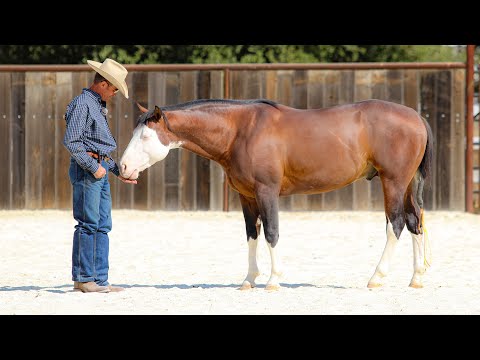
The root of most biting is personal space not being enforced consistently. Teach the horse to keep its head at its own body — not reaching toward you, not mouthing your clothes or hands. Any time the horse's nose comes toward you, move it back with a hand or elbow. Build the expectation that you control the space between you. When the horse respects personal space consistently, biting opportunities are eliminated.
Get a Personalized Plan
Tell us about your horse — get a custom training pathway and trainer recommendation.
Watch & Learn



Need Expert Help?
Get a personalized plan or find a problem horse specialist near you.