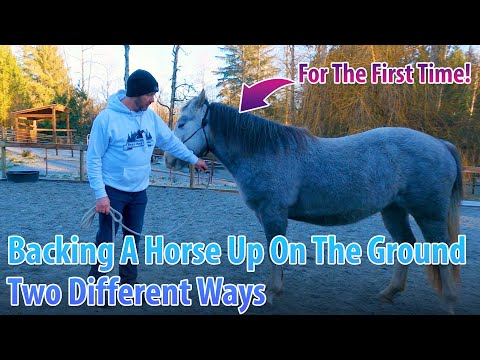
A horse that backs with energy and engagement — stepping back actively with each stride, swinging through its back, carrying its hindquarters under its body — is fundamentally different from a horse that shuffles backward reluctantly with short choppy steps and a stiff, braced back. The difference is not just aesthetic; it reflects whether the horse is genuinely yielding and using its body correctly or merely complying minimally with the request.
The engaged backup requires the horse to reach under its body with its hind legs rather than dragging them backward, which means the hind joints must flex and the back must swing rather than brace. This is developed by asking for the backup with enough energy in the cue that the horse steps back actively rather than barely moving, and by rewarding the energetic steps with an immediate release that clearly distinguishes them from the shuffling steps.
One effective approach is to ask for a few steps of energetic backup and immediately transition to forward movement — walk or trot — then ask for backup again. The transition from forward energy to backward energy tends to produce more active, engaged backup steps than starting from a halt, because the horse carries some of the forward energy into the backward movement rather than starting from zero.
Al Dunning's work with Western performance horses demonstrates the value of energetic backup directly: the backup used in reining patterns, working cow horse, and other performance disciplines must be active and engaged because the horse needs to snap back into forward movement immediately. A horse trained to back with energy and engagement from its early groundwork makes a much easier transition to performance-quality backup than one whose backup was always reluctant and minimal.