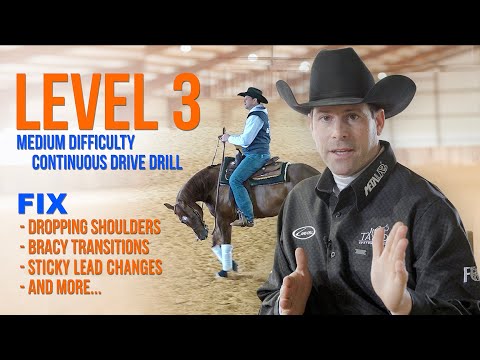
A barrel horse that drops a shoulder in the turn — allowing the inside shoulder to fall inward toward the barrel rather than remaining elevated and balanced through the arc — is one of the most common and most impactful technical problems in barrel racing, because the dropped shoulder disrupts the horse's balance, widens the turn, increases the risk of knocking the barrel, and reduces the efficiency of the push out of the turn that the time between barrels depends on. Addressing it requires understanding what causes the shoulder to drop before applying corrections that address the symptom without the cause. The most common cause of shoulder dropping in barrel turns is the horse being too close to the barrel on the approach — arriving at the barrel without enough room to make the turn without leaning inward to accommodate the tight geometry. A horse that is set up for the barrel at the correct distance has room to arc around it while maintaining balance. A horse that is brought in too tight must lean inward to make the turn possible, which produces the shoulder drop as a consequence of the geometry rather than as an independent training problem. Evaluating and adjusting the approach path — the specific line taken to each barrel — often resolves shoulder dropping that has been treated as a training problem when it is actually a pattern accuracy problem. If the approach is correct and the shoulder dropping persists, the training correction involves developing the horse's ability to maintain his inside shoulder elevation through turns by strengthening the specific muscles that support that elevation and by developing the lateral balance that allows the horse to arc correctly without leaning. Shoulder-in work along the fence — asking the horse to maintain his inside shoulder away from the fence through lateral bend — develops the specific muscle group and the lateral balance that carry over directly into the barrel turn. Circles of varying sizes that specifically maintain the inside shoulder elevation, including deliberate counter-bending that develops the muscles on both sides of the horse's body equally, contribute to the physical development that prevents shoulder dropping. The rider's position in the turn contributes to or prevents shoulder dropping in ways that are often underestimated. A rider who leans into the turn, who drops her inside shoulder, or who puts too much weight onto the inside stirrup amplifies the horse's tendency to drop the inside shoulder by adding weight to the side that is already compromised. Staying tall, keeping the outside shoulder back, and distributing weight evenly through the turn gives the horse the best possible chance of maintaining the balanced turn that correct barrel work requires.
Find the Right Trainer
1,700+ verified trainers across Arizona and the Southwest
Find My Trainer →
Horse Training Pro — Fix Dropping Shoulders in the Turn