Bit selection in barrel racing is one of the most individualized decisions in the sport, and there is no single correct answer because the right bit depends entirely on the horse — his level of training, his mouth sensitivity, how he carries himself at speed, and what specific issues show up in the pattern. That said, there are clear trends and categories that most barrel racers work within, and understanding the logic behind bit choice is more useful than chasing whatever the current world champion happens to be using. The most common starting point for a well-trained, responsive barrel horse is a smooth snaffle or a mild shanked bit with moderate leverage. A horse that is light in the face, rates off your body, and shapes correctly through the turns often goes best in the mildest bit that gives you communication without overriding his responsiveness. Putting a heavy bit on a sensitive, well-trained horse is one of the fastest ways to create resistance, braciness, and a horse that starts avoiding contact altogether. For horses that need more rate control — particularly those that get strong approaching the barrels or tend to flatten out and ignore light cues at speed — a shanked bit with more leverage becomes a practical tool. Twisted wire, correction mouthpieces, and ported bits all show up regularly in barrel racing for this reason. The key is matching the severity of the bit to the specific need, not defaulting to more iron because the horse is being difficult. A horse going hard to the first barrel because he's anticipating and anxious needs a training fix, not a more severe bit. More bit on an anxious horse almost always makes the anxiety worse. Many competitive barrel racers use different bits for different phases of their program — a snaffle or lighter bit for slow work and pattern training at home, and a bit with more whoa for competition where the adrenaline changes everything about how the horse responds. That approach makes sense as long as the rider understands that the competition bit is managing a symptom and the slow work bit is building the actual foundation. The goal over time is a horse that goes correctly in the mildest bit possible, because that horse is the one that's truly broke — and truly broke horses run the most consistent times.
Find the Right Trainer
1,700+ verified trainers across Arizona and the Southwest
Find My Trainer →
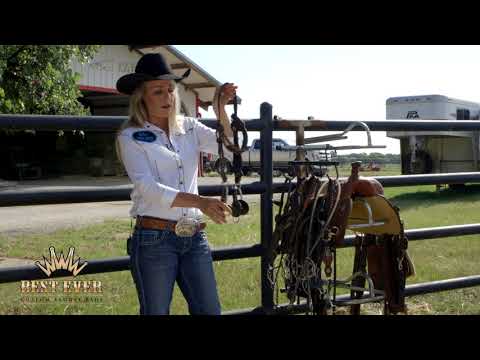
Danyelle Campbell — Barrel Racing Bits Explained