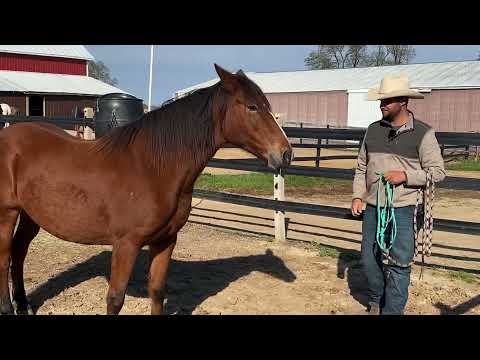
Using body position to catch a difficult or spooky horse requires the handler to suppress the instinctive responses — walking directly toward the horse, making eye contact, moving quickly — that the horse reads as predatory approach and replacing them with a deliberately non-threatening body position that gives the horse time and space to accept the handler's presence rather than flee from it.
The approach begins at a distance the horse finds comfortable — far enough away that the horse is alert but not fleeing — and uses the handler's body position to communicate non-threat. This means approaching at an angle rather than head-on, making the approach trajectory curve rather than direct, keeping the gaze averted or softened rather than maintaining direct eye contact, and moving at a walk with relaxed, unhurried movement rather than purposeful rapid approach.
The approach-and-retreat technique is the most reliable method for gradually reducing a difficult horse's flight distance. The handler approaches until the horse shows the first signs of considering flight — raised head, tense muscles, weight shifting — then immediately stops all forward movement and may even take a step or two back. The retreat is a clear communication that the handler is not a threat, and most horses will relax slightly in response. The handler then approaches again until the flight signal reappears, stops and retreats again. Over many repetitions the flight distance decreases and the horse begins to allow closer approach.
The moment the horse turns toward the handler, drops its head, or shows any curiosity rather than alarm, all approach stops immediately. This turning toward the handler is the horse choosing connection over flight, and the handler's stillness rewards that choice by not advancing and potentially triggering the flight response again. Many horses that seem uncatchable can be approached within minutes using this method once the handler stops using direct, high-energy approach and starts using the non-threatening body position language horses can actually accept.