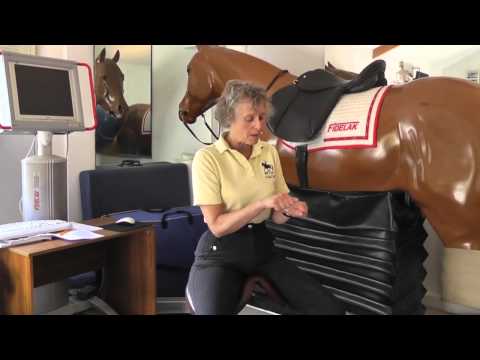
Under saddle, the rider's body position communicates with the horse through three simultaneous channels: weight distribution through the seat bones, the orientation and alignment of the pelvis and spine, and the muscle tone and tension patterns in the rider's body that transmit through the saddle to the horse's back. These channels operate continuously throughout every ride, whether the rider is conscious of them or not, which means that every aspect of the rider's body position is communicating something to the horse at every moment.
Weight distribution through the seat bones is perhaps the most immediately impactful. When a rider shifts weight to one seat bone — by collapsing the hip on that side, tilting the pelvis, or simply sitting heavier on one side — the horse feels this as asymmetric loading and will often move in the direction of the lighter seat bone or toward the heavier one, depending on its training. Advanced riders use deliberate weight aids to steer, prepare for movements, and signal transitions without any visible rein or leg movement.
The orientation of the rider's hips and shoulders relative to the horse's direction of travel is a steering cue that horses learn to read remarkably quickly. A rider who turns their hips and shoulders to look into a corner is applying a body position pressure that many horses begin to follow before the rein aid even arrives. This is why riders are taught to look where they are going — not for their own vision, but because the act of looking turns the torso, which turns the hips, which applies a directional weight and position aid that the horse can feel.
Muscle tone throughout the rider's body communicates through the saddle in ways that are subtle but consistent. A rider who is tense through the back and thighs transmits that tension to the horse's back, producing a horse that carries itself with tension. A rider with a following, supple back and relaxed thighs allows the horse's back to swing freely, which produces a looser, more swinging movement.