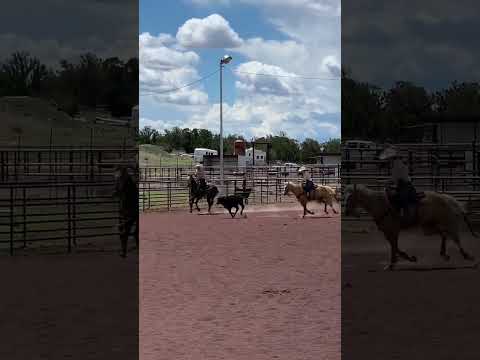
The transition from dummy work to live cattle should happen when the horse is genuinely rope-safe — accepting a loop swinging on both sides, rope contact on its body and legs, and the feel of the rope going tight without alarm — and when its foundational responses of rate, stop, and lateral control are confirmed well enough to hold up when cattle add excitement to the equation. Neither condition is a fixed timeline but a behavioral standard: the horse demonstrates the responses consistently, not occasionally. The dummy itself will tell you when the horse is ready to move on — a horse that walks past the dummy without concern, accepts the roper swinging a loop and making a catch at close range without changing stride, and stands quietly while the roper dallies and builds rope pressure against the horn has extracted what the dummy can teach it. Staying on the dummy past that point produces a horse that is over-practiced on a stationary target and under-prepared for the movement, smell, and unpredictability of live cattle. The first live cattle introduction should still be low-pressure — slow, calm cattle at a pace significantly below what competition will eventually require — so the horse's first experience of a moving target is manageable rather than overwhelming. Expect the horse to show more energy and forward drive beside live cattle than it did beside the dummy, because the cattle's movement and smell trigger the horse's chase instinct in ways the dummy never will. That energy is normal and useful; the training's job is to channel it rather than suppress it.
Find the Right Trainer
1,700+ verified trainers across Arizona and the Southwest
Find My Trainer →
Watch: When to Move From the Dummy to Live Cattle
▶
Slow and Easy Rope Horse Training — When to Move From the Dummy to Live Cattle
Rope Horse Training