Self-carriage is the quality of a horse maintaining its balance, frame, and rhythm independently of constant rein and leg support from the rider. A horse in self-carriage does not lean on the reins for balance, does not require continuous driving leg to maintain pace, and does not fall apart in frame or rhythm when the rider momentarily reduces or releases the aids. It is the result of the horse having developed sufficient muscular strength, balance, and training to sustain correct movement independently rather than depending on the rider to hold it together. Self-carriage cannot be imposed — it develops progressively as the horse becomes physically stronger and more balanced through correct training. The test of self-carriage is simple: the rider softens or completely releases the rein for a moment, and a horse in self-carriage maintains its frame, pace, and balance without falling onto the forehand, losing rhythm, or rushing. A horse that immediately falls onto the forehand, speeds up, or loses its frame when the rein is softened is not in self-carriage — it is being held in an artificial frame by the rider's continuous rein contact. Developing self-carriage requires gradually reducing the amount of support the rider provides while expecting the horse to maintain its own balance and frame in the space the rider creates. This is done incrementally — asking the horse to maintain its carriage for one stride without rein support, then two, then across a full circle — rewarding any moment the horse carries itself independently, and quietly reestablishing the contact and frame when it loses it before trying again.
Find the Right Trainer
1,700+ verified trainers across Arizona and the Southwest
Find My Trainer →
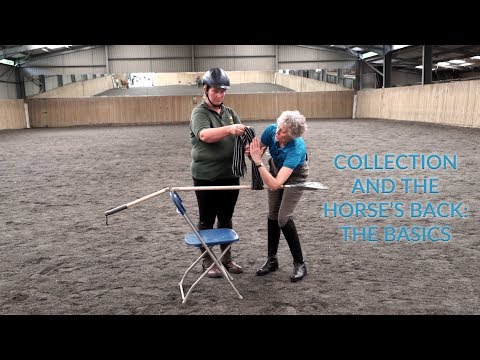
Watch: How to Develop a Horse's Ability to Work in Self-Carriage
▶
Collection and the Horse's Back — Developing a Horse's Ability to Work in Self-Carriage
Mary Wanless