Collection is the redistribution of the horse's balance from a predominantly forehand-heavy carriage to a more equal or hindquarter-dominant carriage, achieved through the horse's increased engagement of its hindquarters, lowering of its croup, and elevation of its forehand. It is not a head position achieved through rein pressure, and it cannot be forced or maintained through equipment that holds the horse's head in a fixed position. True collection is the result of the horse carrying itself from behind with a strong, active hindquarter and a relaxed, swinging back that allows energy to flow through the entire body into a soft, receiving contact. The prerequisites for beginning collection work are substantial — the horse must already move forward from a light leg aid with genuine impulsion, accept a consistent contact without resistance, maintain rhythm and relaxation through transitions, travel with reasonable straightness on both reins, and respond to basic lateral aids. These qualities must be present before collection work begins because collection asks the horse to compress and redirect its energy, and a horse without sufficient forward energy, suppleness, or balance has nothing to compress and redirect. Collection is developed gradually through transitions that engage the hindquarters, lateral exercises that develop the horse's ability to carry weight on its hind end, and progressive shortening of the frame within gaits while maintaining the same rhythm and energy. A horse that is collected correctly appears to move with increased power, elevation, and ease simultaneously — the opposite of a horse whose frame has been compressed through restraint, which appears stiff, restricted, and labored.
Find the Right Trainer
1,700+ verified trainers across Arizona and the Southwest
Find My Trainer →
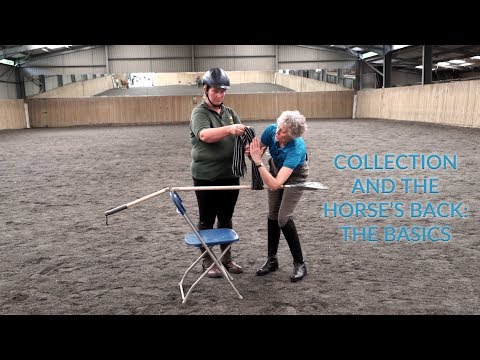
Watch: How to Develop Collection in a Horse and the Prerequisites for Beginning
▶
Collection and the Horse's Back — Developing Collection and the Prerequisites for Beginning It
Mary Wanless