Transitions between gaits are one of the most important exercises in a young horse's development because they simultaneously develop responsiveness to the aids, balance, rhythm, and the horse's ability to shift its weight and engage its hindquarters on cue. An upward transition — from walk to trot, or trot to canter — asks the horse to increase its energy and pace in response to a driving leg aid. A downward transition — from canter to trot, or trot to walk — asks the horse to collect its energy and reduce its pace in response to a softening of the driving aids combined with a light rein and seat aid. In early training, transitions should be introduced at the simplest level — walk to trot and trot to walk — before canter transitions are introduced, because these simpler transitions establish the horse's understanding of the concept before the physical demands are increased. The quality of a transition is measured by its promptness — how quickly the horse responds to the aid — and its smoothness — how well the horse maintains balance and rhythm through the change of gait. A young horse will rarely produce smooth, prompt transitions in the earliest lessons, and this is expected. The goal in early transition work is the concept — the horse learning that a specific aid means change your pace — rather than the quality, which develops over many repetitions across many sessions. Transitions should be practiced frequently throughout every session, interspersed with work at each gait, rather than grouped together in a single portion of the lesson. A horse that transitions promptly and smoothly from light aids in both directions is a horse that is genuinely responsive and correctly balanced.
Find the Right Trainer
1,700+ verified trainers across Arizona and the Southwest
Find My Trainer →
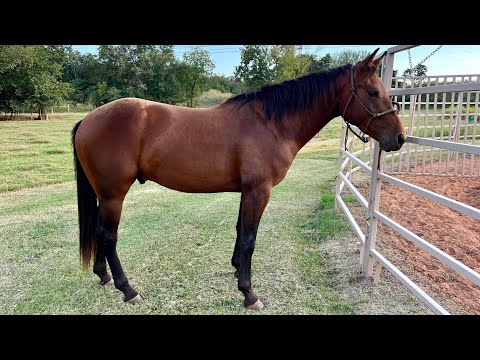
Watch: How to Introduce Transitions Between Gaits in a Young Horse's Training
▶
60-Day Colt Starting — How to Introduce Transitions Between Gaits in a Young Horse's Training
Low Stress Horsemanship