A horse that plants its feet and refuses to back has either never learned the exercise correctly, learned to brace through a training process that released to the wrong answer, or is experiencing physical discomfort that makes backing painful. Before any retraining begins, rule out the physical causes — hock pain, back soreness, and sacroiliac issues can all produce reluctance to back and will not be fixed by training pressure. A veterinary assessment is appropriate for any horse that consistently and strongly refuses to back despite having been trained to do so.
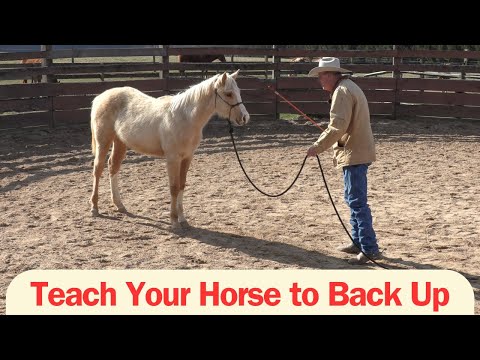
For a horse with no physical issues that has simply learned to plant and brace, the retraining approach is to apply rhythmic pressure rather than steady pulling pressure. Steady pulling invites the horse to lean into the contact and wait you out — rhythmic pulsing pressure is harder to brace against because it changes constantly. Apply a one-two-one-two rhythm with the lead rope, increasing the energy of each pulse until the horse takes even one step back, then releasing immediately and completely.
If rhythmic lead rope pressure produces no result, some trainers use a dressage whip or carrot stick to tap rhythmically on the horse's chest or front legs — not to hurt the horse but to create a stimulus that the horse can only escape by moving backward. The moment the horse shifts weight or steps back, all tapping stops. The association between tapping and backward movement is established quickly in most horses, and the exercise can be transferred back to lead rope pressure once the horse understands the concept.
For a horse that plants specifically because it is pushy and dominant rather than confused, the approach includes addressing the overall relationship and the horse's general respect for pressure before focusing on the backup specifically. A horse that will not move its feet when asked to back is showing a significant gap in its yielding education that affects every other exercise as well.