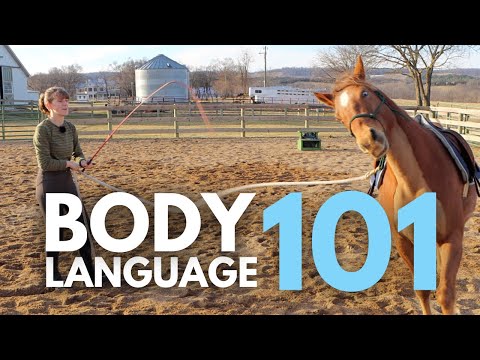
Horses read human body position with extraordinary precision and use it as a primary source of information about the human's intent, emotional state, and the direction of any request being made. This ability is not learned through exposure to humans — it is built into the horse's neurology as a social species whose survival has always depended on reading the body language of other animals accurately and instantly. A horse that cannot read the posture of a predator approaching from across a field is a horse that gets eaten. The same perceptual system that reads predator intent reads handler intent, which is why body position is one of the most powerful communication tools available in horse training.
The specific elements of human body position that horses read consistently include direction of gaze and eye contact, the orientation of the shoulders relative to the horse, the position of the hips and feet, the distance between the handler and the horse, and the quality of movement — whether the handler is moving with direct, purposeful energy or with relaxed, open body language. Each of these elements communicates something specific: direct eye contact and squared shoulders toward the horse signal pressure; averted gaze and angled body signal invitation; movement toward the driving zone signals send; movement away signals draw.
The practical implication is that a handler who does not understand or control their own body position is sending constant, often contradictory messages to the horse that the horse must either decipher or ignore. A handler who squares their shoulders toward a horse while trying to invite it to approach is simultaneously asking for approach and applying pressure that suggests the horse should move away. The horse's apparent confusion in such situations is not the horse's failure — it is the handler sending conflicting signals and then blaming the receiver for not understanding.