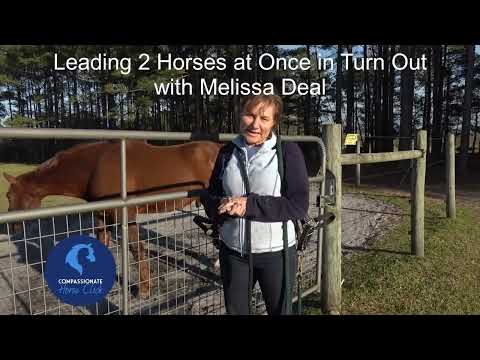
Managing multiple horses simultaneously through body position is one of the most demanding applications of body position communication skills because it requires the handler to influence different horses with different body position signals while maintaining awareness of all of them simultaneously. This is the skill required for working a string of horses, for managing a group paddock situation, or for the more advanced liberty work that involves directing multiple horses at once.
The fundamental challenge is that body position is directional — it influences the horse it is directed toward most strongly, but it also communicates to every horse within visual range simultaneously. A driving position directed at one horse may inadvertently activate the driving zone of another horse standing nearby. A draw-creating body position may invite multiple horses to approach at the same time. Managing these unintended communications requires the handler to be very precise about the direction and intensity of their body position signals.
With a group of horses in a paddock, the handler develops awareness of which horses are most sensitive to body position and which are more contained, and uses that knowledge to route their movement through the group without triggering unnecessary responses. Moving through the middle of a group of horses with direct, high-energy body position typically produces scatter — the horses move away from the handler. Moving through the same group with angled, low-energy, non-direct body position allows the handler to pass without creating disruption.
For deliberate liberty work with multiple horses simultaneously, the handler must develop the ability to use directed body position cues that specifically target individual horses while the others remain stationary or continue their own activities. This requires extraordinary precision and typically develops through years of practice — beginning with two horses and building toward larger groups as the handler's body position vocabulary becomes precise enough to direct one horse without inadvertently directing another.