All Questions
120 answersQ 01 of 120
What role do mustangs play in the broader horse industry?
Mustangs occupy a specific and evolving niche in the broader horse industry that reflects both their unique heritage and the growing public interest in their training potential demonstrated through competition events and social media visibility. In the competition world, mustangs have established credibility through consistent Extreme Mustang Makeover performances demonstrating…
Read full answer →Q 02 of 120
How do you develop the lope on a wild horse under saddle?
Developing the lope on a newly started wild horse requires confirming a forward, relaxed trot response before asking for the gait transition, because a horse that is not yet genuinely forward and relaxed at the trot will almost certainly produce a tense, unbalanced, or explosive response when asked for the…
Read full answer →Q 03 of 120
Why do wild horses spook differently than domestic horses?
Wild horses spook differently from domestic horses in ways that reflect the difference between a horse whose threat-detection system has been calibrated by life-or-death survival requirements and one whose threshold has been adjusted by years of desensitization and accumulated positive experience with a wide range of stimuli. The most obvious…
Read full answer →Q 04 of 120
What is the Mustang Heritage Foundation?
The Mustang Heritage Foundation is a nonprofit organization established in 2001 with the mission of facilitating the adoption of wild horses and burros from the Bureau of Land Management's holding program and increasing public awareness of mustangs through training competitions, educational programs, and media outreach. The organization's most significant program…
Read full answer →Q 05 of 120
Who are the most successful Extreme Mustang Makeover competitors?
The Extreme Mustang Makeover competition has produced a consistent group of top competitors whose multiple placements across different events have demonstrated the reproducibility of their methods with horses of different backgrounds and temperaments. Scott Grosskopf has established himself as one of the most consistently successful Extreme Mustang Makeover competitors, with…
Read full answer →Q 06 of 120
How do you find BLM mustangs available for adoption?
Finding BLM mustangs available for adoption has become significantly more accessible through the BLM's online adoption platform, which allows prospective adopters across the country to view available horses, access information about their herd of origin and basic characteristics, and participate in online adoption events without traveling to a specific facility…
Read full answer →Q 07 of 120
How do you use a round pen when starting a wild horse?
The round pen is the most commonly used environment for beginning wild horse training because its circular shape and enclosed space allow the trainer to maintain consistent pressure on the horse without corners to hide in or the ability to simply run away indefinitely, while still providing enough room for…
Read full answer →Q 08 of 120
What can domestic horse trainers learn from wild horse training?
Wild horse training offers domestic horse trainers a specific and valuable set of lessons that the routine of working with already-handled horses does not consistently provide, because the stripped-down communication challenge of building a relationship from absolute zero reveals the essential elements of horsemanship that are present but obscured in…
Read full answer →Q 09 of 120
How do you desensitize a wild horse to objects and movement?
Desensitizing a wild horse to the wide range of objects and movements it will encounter in a domestic environment is one of the most extensive components of the gentling process, requiring systematic exposure to the specific stimuli of human life that the horse has never encountered and whose unfamiliarity triggers…
Read full answer →Q 10 of 120
What is the Extreme Mustang Makeover?
The Extreme Mustang Makeover is a competition series organized by the Mustang Heritage Foundation in which trainers adopt untouched BLM mustangs and have one hundred days to gentle, train, and develop them before presenting the horses in a competitive event judged on the quality and breadth of the transformation achieved.…
Read full answer →Q 11 of 120
What is the BLM and what role does it play with wild horses?
The Bureau of Land Management is the federal agency within the Department of the Interior responsible for managing approximately 245 million acres of public land in the western United States, including the herd management areas where wild horses and burros live under federal protection. The BLM's role with wild horses…
Read full answer →Q 12 of 120
What costs should you expect when adopting a BLM mustang?
The costs associated with BLM mustang adoption extend well beyond the adoption fee itself, and prospective adopters who budget only for the minimum adoption fee often find themselves financially unprepared for the actual costs of the first year with a wild horse. The adoption fee represents only the initial acquisition…
Read full answer →Q 13 of 120
How do you halter a wild horse for the first time?
The first haltering of a wild horse is a milestone that requires specific preparation and technique because it involves asking the horse to accept an object placed over the most sensitive and reactive part of its body — the head and face — and requires that the horse be sufficiently…
Read full answer →Q 14 of 120
How do wild horses perceive humans when first encountered?
A wild horse encountering a human for the first time perceives the human as a predator — specifically, as a stimulus that activates the same threat-assessment and flight-preparation neurological sequence that a mountain lion or wolf on the range would have triggered. This is not irrationality or confusion on the…
Read full answer →Q 15 of 120
How has the BLM wild horse adoption program changed in recent years?
The BLM wild horse adoption program has undergone significant changes in recent years driven by the growing gap between the number of horses being gathered and removed from public lands and the number being successfully adopted into private care — a gap that has resulted in a holding population in…
Read full answer →Q 16 of 120
What makes wild horse training the ultimate test of horsemanship?
Wild horse training is considered by many experienced horsepersons across disciplines to be the most complete test of genuine horsemanship skill available because it removes every element that compensates for horsemanship gaps in conventional training and leaves only the trainer's actual ability to communicate, read, and respond to a horse…
Read full answer →Q 17 of 120
Who are the most well-known wild horse trainers?
The wild horse training world has produced a number of practitioners whose methods, competitive achievements, and public presence have significantly shaped how the broader horse community thinks about mustang training and the potential of horses that arrive with no human experience. Monty Roberts, whose career spans decades of work with…
Read full answer →Q 18 of 120
What is join-up and who developed it?
Join-up is a method of establishing initial communication and trust between a human and an untouched or fearful horse by using the horse's own herd communication language — specifically the body language exchanges that determine social acceptance and rejection within a wild horse band — to invite the horse to…
Read full answer →Q 19 of 120
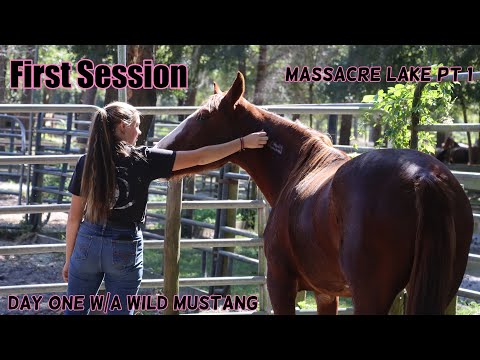
What does success look like at the end of the first session with a wild horse?
Success at the end of the first session with a wild horse looks different from what most people imagine before they have worked with untouched horses, because genuine success in the first session is not about how much was accomplished in terms of training milestones but about whether the horse's…
Read full answer →Q 20 of 120
What makes wild horse training unique compared to starting a domestic horse?
Wild horse training is unique from starting a domestic horse in several interconnected ways that reflect the wild horse's complete absence of human experience and the specific physical and psychological adaptations it has developed through life in a natural herd environment. The most fundamental difference is the starting point: a…
Read full answer →Q 21 of 120
How do trainers manage the 100-day timeline of the Extreme Mustang Makeover?
Managing the hundred-day timeline of the Extreme Mustang Makeover requires a structured approach that balances efficient progression through necessary training stages with the responsiveness to the individual horse's development rate that effective wild horse training demands — because the most successful competitors describe the timeline management as the discipline of…
Read full answer →Q 22 of 120
What groundwork should a wild horse have before being started under saddle?
The groundwork prerequisites for starting a wild horse under saddle are more extensive and more specifically defined than those for starting a domestic horse, because the wild horse must have genuinely confirmed foundational responses rather than simply compliance under immediate pressure — responses that will hold under the additional stress,…
Read full answer →Q 23 of 120
How is join-up different from traditional round pen work?
Join-up differs from traditional round pen work in its fundamental goal, its termination criteria, and the relationship it aims to establish between horse and trainer — differences that reflect a philosophical distinction between training approaches that work through pressure and exhaustion versus those that work through communication and voluntary choice.…
Read full answer →Q 24 of 120
How does Monty Roberts approach wild horses differently from other trainers?
Monty Roberts's approach to wild horses reflects his foundational conviction that all horse training should be conducted through communication in the horse's own language rather than through force, and his specific contribution to wild horse training is the systematic development of join-up as a replicable method that any sufficiently skilled…
Read full answer →Q 25 of 120
How does a wild horse's social structure affect its trainability?
The social structure of wild horse bands — specifically the trust-based leadership of the lead mare and the horse's evolved readiness to follow a leader whose judgment has been demonstrated to be trustworthy — creates a trainability framework that experienced wild horse trainers deliberately work within rather than against. The…
Read full answer →Q 26 of 120
How do you read when to advance and when to retreat with a wild horse?
Reading the precise moment to advance versus retreat is the skill that separates experienced wild horse trainers from those still developing their feel, because the effectiveness of advance-and-retreat work is entirely dependent on the timing of the release — a retreat that comes after the horse has already escalated past…
Read full answer →Q 27 of 120
Where do wild mustangs come from?
Wild mustangs trace their ancestry to the horses brought to North America by Spanish conquistadors beginning in the early 1500s, with some of the most historically significant introductions coming through Hernán Cortés's expedition to Mexico in 1519 and subsequent Spanish settlement throughout the American Southwest. These horses — primarily of…
Read full answer →Q 28 of 120
How do you teach a wild horse to load in a trailer?
Teaching a wild horse to load in a trailer requires addressing one of the most psychologically challenging demands in its early training — asking it to enter a small, dark, enclosed space that resembles a predator's den more than anything in its previous experience — and the approach must reflect…
Read full answer →Q 29 of 120
How long does it take to fully develop a mustang into a reliable riding horse?
The timeline for developing a mustang into a genuinely reliable riding horse depends significantly on what reliable means in the context of the specific horse's intended use and the specific rider's definition of reliability, and the honest answer is that the development process is measured in years rather than months…
Read full answer →Q 30 of 120
How do you get a wild horse comfortable with ropes?
Getting a wild horse comfortable with ropes is a specific desensitization challenge because ropes simulate several of the physical sensations associated with capture and restraint — the pressure around the body, the restriction of movement, the connection to another animal or object — that the horse may have experienced during…
Read full answer →Q 31 of 120
How do you select a mustang for competition?
Selecting a mustang for competition — whether for the Extreme Mustang Makeover or similar events — involves assessing the specific combination of physical qualities, apparent temperament, and early behavioral indicators that suggest the horse will be able to develop the training and performance qualities needed for competitive success within the…
Read full answer →Q 32 of 120
How do you know when a wild horse is genuinely desensitized versus just tolerating?
Distinguishing genuine desensitization from tolerance or suppression is one of the most important judgment skills in wild horse training because the two states produce very different horses — the genuinely desensitized horse will maintain its acceptance across novel situations, increased intensity, and environmental changes, while the tolerating horse will appear…
Read full answer →Q 33 of 120
What disciplines are mustangs best suited for long term?
Mustangs have demonstrated competitive and recreational competence across a remarkably broad range of disciplines, reflecting their genetic diversity, physical durability, and the adaptability that centuries of surviving in varied environments produced — and the question of which disciplines they are best suited for is better answered by assessing the individual…
Read full answer →Q 34 of 120
How does the flight instinct differ in a wild horse versus a domestic horse?
The flight instinct in a wild horse operates at a level of sensitivity and reactivity that is meaningfully different from that of a domestic horse, reflecting both the genetic selection of generations of survival without human protection and the individual wild horse's complete lack of experience with the desensitization that…
Read full answer →Q 35 of 120
How do you keep a mustang mentally healthy through long-term training?
Maintaining a mustang's mental health through years of training and domestic life requires ongoing attention to the specific psychological needs of a horse that evolved as a free-roaming social animal, and the management practices that support mental health in mustangs often differ from standard domestic horse management in ways that…
Read full answer →Q 36 of 120
How do wild horses communicate with each other?
Wild horses communicate through a sophisticated combination of body language, vocalizations, scent, and physical contact that allows herd members to coordinate movement, establish and maintain social hierarchy, signal emotional states, and respond collectively to threats. Body language is the primary communication channel and the one most relevant to trainers, because…
Read full answer →Q 37 of 120
How do you teach a wild horse to lead?
Teaching a wild horse to lead is the first practical application of the pressure-and-release principle after the horse has accepted haltering, and it establishes the foundational communication that all subsequent handling depends on — the horse learning that pressure from the halter and lead rope means move in the direction…
Read full answer →Q 38 of 120
How does pressure and release apply differently with a wild horse than a domestic horse?
The principles of pressure and release are the same for wild and domestic horses — pressure creates a search for relief, release rewards the correct response, and timing determines what specifically the horse learns from the interaction — but the application of these principles with a wild horse requires a…
Read full answer →Q 39 of 120
How does join-up work with a wild horse?
Join-up with a wild horse follows the same fundamental communication sequence as join-up with any untouched horse but requires greater precision, more patience, and a more sensitive reading of the horse's threshold because a truly wild horse's flight instinct operates at a level that can produce panic rather than productive…
Read full answer →Q 40 of 120
How do you develop steering on a newly started wild horse?
Developing steering on a newly started wild horse builds directly on the shoulder yield and leading work of the ground training phase, which has already established the concept of moving the front end in response to pressure — the rein simply becomes the tool for applying that same pressure from…
Read full answer →Q 41 of 120
How do you manage a buck or bolt on a wild horse's first rides?
Managing a buck or bolt on a wild horse's early rides requires both a physical response in the moment and an analytical response after the fact that identifies what triggered the behavior and what preparation gap it reflects — because a significant defensive response during early rides almost always indicates…
Read full answer →Q 42 of 120
What is the future of the wild horse program in the United States?
The future of the BLM wild horse program is one of the most contested policy questions in American public land management, with ongoing tension between the ecological and budgetary pressures of a growing holding population, the advocacy of wild horse protection groups, the concerns of ranching interests, and the practical…
Read full answer →Q 43 of 120
What is the Mustang Million and how does it differ from the Extreme Mustang Makeover?
The Mustang Million is a high-stakes mustang training competition that offered prize money significantly larger than the Extreme Mustang Makeover format, designed to attract top-level trainers who might not otherwise prioritize mustang training competitions and to generate national media attention for wild horse adoption through the combination of elite competition…
Read full answer →Q 44 of 120
How is a wild horse different from a domestic horse to train?
Training a wild horse is fundamentally different from starting a domestic horse because the wild horse arrives with no previous positive experience of human contact — no haltering, no handling, no exposure to the sights, sounds, and demands of the human environment — making the earliest stages of the process…
Read full answer →Q 45 of 120
What disciplines can a mustang compete in after training?
Mustangs that have been successfully gentled and trained have competed and excelled across an remarkably wide range of disciplines, demonstrating a versatility that reflects both the athletic capability of the horses themselves and the dedication of the trainers who developed them. The most natural fit for many mustangs is trail…
Read full answer →Q 46 of 120
What happens to mustangs after the Extreme Mustang Makeover competition?
The post-competition fate of mustangs from the Extreme Mustang Makeover follows several different pathways that reflect the specific horse's performance, the interest generated during the competition, and the trainer's situation and goals. The most common post-competition pathway is adoption or sale at the competition venue immediately following the event, where…
Read full answer →Q 47 of 120
How does stress affect a wild horse in captivity?
The transition from the open range to captivity represents an extreme environmental change for a wild horse, and the stress of this transition manifests in specific behavioral, physiological, and psychological ways that trainers must understand and manage carefully to create the conditions in which trust and learning are possible rather…
Read full answer →Q 48 of 120
What is the science behind join-up?
The scientific explanation for join-up draws on several well-established principles of equine ethology, behavioral neuroscience, and learning theory that together explain why the method produces genuine behavioral change rather than simply compliance under physical pressure. The foundational principle is that horses are social animals with evolved neurological systems for reading…
Read full answer →Q 49 of 120
What are the facility requirements for adopting a BLM mustang?
The BLM's facility requirements for mustang adoption are designed to ensure that the adopter can safely contain and care for a wild horse that may not yet accept close human contact, and they are more specific than what most horse owners consider standard adequate horse housing. The minimum corral or…
Read full answer →Q 50 of 120
Why are mustangs considered special by the horse training community?
Mustangs hold a particular place of respect within the horse training community that reflects both what they represent symbolically — freedom, resilience, the original American horse — and what the experience of working with them teaches trainers about the fundamentals of horsemanship and horse-human communication. Trainers who have worked extensively…
Read full answer →Q 51 of 120
How do competitors prepare a mustang for the Extreme Mustang Makeover?
Preparing a mustang for the Extreme Mustang Makeover within the hundred-day window requires a carefully structured training timeline that moves efficiently through the gentling, ground work, and under-saddle development phases without rushing any stage past genuine consolidation — and experienced competitors describe the management of this timeline as the primary…
Read full answer →Q 52 of 120
How do you know when join-up has genuinely occurred?
Distinguishing genuine join-up from a horse that has simply slowed down from fatigue or is approaching out of curiosity without the full social engagement that join-up represents requires reading specific behavioral markers that indicate the horse has genuinely shifted its assessment of the trainer from threat to trusted companion. The…
Read full answer →Q 53 of 120
How do I work with a mustang that is aggressive toward humans?
Aggression toward humans in a mustang — biting, striking, charging, or threatening behavior — must be assessed carefully to distinguish between the defensive aggression of a fearful horse and the assertive aggression of a horse that has learned through experience that threatening behavior produces the removal of demands or the…
Read full answer →Q 54 of 120
What is gentling and how does it differ from training?
Gentling refers specifically to the process of reducing a wild or fearful horse's defensive responses to human presence and contact — the foundational work of building acceptance, trust, and habituation that must precede any specific skill training. Where training adds new behaviors to a horse's repertoire by teaching it to…
Read full answer →Q 55 of 120
What is the difference between adopting and purchasing a BLM mustang?
The BLM offers wild horses through two distinct programs — adoption and sale — that differ primarily in the title transfer timeline, the minimum age requirements for eligible animals, and the fee structures associated with each pathway. Adoption is the traditional program in which the adopter pays a minimum adoption…
Read full answer →Q 56 of 120
What mistakes do people make during first contact with a wild horse?
The mistakes made during first contact with wild horses fall into predictable patterns that reflect the gap between human social instincts and the communication system the horse actually uses, and understanding them specifically allows trainers at all levels to avoid the most common errors that produce setbacks rather than progress.…
Read full answer →Q 57 of 120
How long does it typically take to get a wild horse to accept touch for the first time?
The timeline for a wild horse accepting first touch from a human varies enormously based on the individual horse's temperament, its previous experience with humans if any, the trainer's skill level, the training environment, and what specifically is meant by first touch — and ranges from a matter of hours…
Read full answer →Q 58 of 120
What are the legal responsibilities of a BLM mustang adopter?
The legal responsibilities of a BLM mustang adopter during the one-year period before title transfer are defined by the adoption agreement signed at the time of adoption and by the regulations of the Wild Free-Roaming Horses and Burros Act, and they place specific affirmative obligations on the adopter rather than…
Read full answer →Q 59 of 120
How do you desensitize a wild horse to its feet being handled?
Desensitizing a wild horse to foot handling is one of the most technically demanding components of the gentling process, both because the feet represent the horse's primary means of escape and because the physical position required for foot handling — the trainer at ground level handling a lower limb —…
Read full answer →Q 60 of 120
What is a feral horse versus a truly wild horse?
The distinction between a feral horse and a truly wild horse is a biological one that reflects whether the animal's species has ever been domesticated rather than whether the specific individual has ever had human contact. A truly wild animal belongs to a species that has never been domesticated through…
Read full answer →Q 61 of 120
How do you get a wild horse to face you instead of fleeing?
Getting a wild horse to turn and face the trainer — shifting from the flight-oriented hindquarters-toward posture to the curiosity-and-assessment facing posture — is one of the most significant early milestones in wild horse training because it represents the horse's shift from treating the trainer as a threat to flee…
Read full answer →Q 62 of 120
Can join-up go wrong and what causes it?
Join-up can go wrong in several specific ways that reflect either errors in the trainer's technique, misreading of the horse's signals, or horses whose temperament or previous experience makes them respond differently to the process than the typical horse. The most common error is continuing to drive a horse past…
Read full answer →Q 63 of 120
What are the judging criteria at the Extreme Mustang Makeover?
The judging criteria at the Extreme Mustang Makeover evaluate both the quality of the transformation from untouched wild horse to trained domestic horse and the specific performance skills demonstrated in the competition, with different weight assigned to different components depending on the specific class and competition format. The halter or…
Read full answer →Q 64 of 120
How do you develop a mustang from wild to trail horse?
Developing a mustang into a reliable trail horse is one of the most natural long-term development pathways available, because the specific qualities that mustangs developed through generations of living on varied terrain — sure-footedness, environmental awareness, physical durability, and efficient movement over uneven ground — translate directly into the qualities…
Read full answer →Q 65 of 120
How does title transfer work for a BLM mustang?
Title transfer is the process through which legal ownership of a BLM mustang passes from the federal government to the private adopter after the one-year adoption period has been completed, and it represents the transition from the conditional custody of the adoption period to full legal ownership that allows the…
Read full answer →Q 66 of 120
How do you maintain a mustang's trust through changes in ownership?
Maintaining a mustang's trust through a change in ownership is a specific challenge that requires careful management of the transition process, because the trust relationship that forms the foundation of a trained mustang's reliability is built with specific individuals through specific experiences and does not automatically transfer to new handlers…
Read full answer →Q 67 of 120
What body language signals mean a wild horse is ready to accept approach?
Recognizing the specific body language signals that indicate a wild horse is genuinely ready to accept closer human approach — rather than simply tolerating it while suppressing a flight response — is one of the most important and most trainable observation skills in wild horse work, because advancing before these…
Read full answer →Q 68 of 120
How do you introduce a wild horse to a saddle pad and saddle?
Introducing a saddle pad and saddle to a wild horse requires treating each item as a separate desensitization project, because the saddle represents one of the most significant physical demands in the entire early training process — a large, unfamiliar object placed on the horse's back in exactly the position…
Read full answer →Q 69 of 120
How does the BLM wild horse adoption process work?
The BLM wild horse adoption process is the primary pathway through which untouched mustangs and burros from federal holding facilities enter private ownership, providing qualified applicants the opportunity to adopt a wild horse for a minimum fee with the commitment to provide appropriate care for at least one year before…
Read full answer →Q 70 of 120
What happens after join-up — how do you build on it?
Join-up is the beginning of the trust relationship rather than the completion of it, and the work that follows join-up builds on the voluntary connection it established to develop the specific skills, desensitization, and responsiveness that a useful domestic horse requires. The immediate post-join-up period is typically the first opportunity…
Read full answer →Q 71 of 120
What is a mustang?
A mustang is a free-roaming horse found primarily in the western United States, descended from domesticated horses brought to North America by Spanish explorers in the 16th century and subsequently escaped or released over centuries of settlement and ranching. The term mustang comes from the Spanish word mestengo, meaning stray…
Read full answer →Q 72 of 120
How do you develop forward energy in a wild horse on the ground?
Developing genuine forward energy — willingness to move ahead with impulsion rather than reluctance, dragging, or constant encouragement — is a specific training goal for wild horses because many mustangs go through a phase of what trainers describe as shutting down or becoming dull to forward cues as a coping…
Read full answer →Q 73 of 120
How do I fix a mustang that has learned to run over its handler?
A mustang that has learned to run over, push through, or crowd its handler has developed this pattern through a training history in which the horse's invasions of the handler's space were not clearly and immediately corrected, and the behavior has been reinforced by the absence of consequence — the…
Read full answer →Q 74 of 120
How do I fix a mustang that has learned to pull back when tied?
A mustang that has learned to pull back when tied has typically had one or more experiences of being tied before it was genuinely ready to accept restraint — encountering the hard end of a rope attached to an immovable object while in a fearful state — and the pulling-back…
Read full answer →Q 75 of 120
How do other countries manage and train feral horse populations?
Feral horse populations exist on multiple continents, and the management and training approaches applied to them vary considerably based on cultural attitudes toward horses, the regulatory frameworks governing feral animal management, and the specific ecological contexts in which the horses live. Australia's brumby population — feral horses descended from domestic…
Read full answer →Q 76 of 120
How do you desensitize a wild horse to human touch?
Desensitizing a wild horse to human touch is a progressive process that moves from the horse tolerating the presence of a hand at a distance through touching with a tool like a training stick, to touching the horse's body directly with a hand, to handling the specific body parts —…
Read full answer →Q 77 of 120
What is the herd hierarchy in a wild mustang band?
The social structure of a wild mustang band is organized around two primary leadership roles that are often misunderstood in the popular depiction of wild horses — the lead mare and the stallion — and the relationships between these roles have direct implications for how trainers approach working with horses…
Read full answer →Q 78 of 120
How do you correct a wild horse that strikes or kicks during ground work?
Striking and kicking during ground work with a wild horse must be addressed carefully and with a clear understanding of whether the behavior reflects fear-based defense, pain, disrespect, or the normal instinctive responses of a horse still in the early stages of trust development — because the appropriate response differs…
Read full answer →Q 79 of 120
What is the difference between a horse that is shut down and one that is calm?
The distinction between a horse that is genuinely calm and one that has shut down — a term describing a horse that has essentially frozen its behavioral responses as a survival strategy in an overwhelming situation — is one of the most critical judgment calls in wild horse training, because…
Read full answer →Q 80 of 120
How do I fix a mustang that panics when separated from other horses?
Separation anxiety in a mustang — the horse panicking, calling, refusing to work, or becoming dangerous when taken away from companion horses — is a specific management and training challenge that reflects both the horse's evolutionary dependence on herd membership for safety and the specific vulnerability of a horse whose…
Read full answer →Q 81 of 120
How do you develop collection and softness in a mustang?
Developing collection and softness in a mustang follows the same progressive principles as developing these qualities in any horse, but the specific foundation of trust and lightness that effective mustang training builds often creates a particularly receptive starting point for collection work because the horse has learned from its first…
Read full answer →Q 82 of 120
What happens if an adopter cannot keep their BLM mustang?
An adopter who finds themselves unable to continue providing care for a BLM mustang during the one-year adoption period before title transfer has specific obligations and options that differ from those of a horse owner dealing with a horse they own outright, because the BLM retains legal title during the…
Read full answer →Q 83 of 120
How do you introduce a wild horse to a rider's weight for the first time?
Introducing a wild horse to a rider's weight is a progressive process that begins well before anyone swings a leg over, with a specific sequence of preparations that familiarize the horse with the pressure, position, and movement of a rider's body at incrementally increasing intensity. The sequence typically begins with…
Read full answer →Q 84 of 120
How do you introduce a wild horse to grooming?
Introducing a wild horse to grooming requires approaching it as a desensitization exercise rather than a cosmetic care routine, because each grooming tool — brush, curry comb, mane comb, hoof pick — is an unfamiliar object making direct contact with the horse's body in ways that require specific habituation before…
Read full answer →Q 85 of 120
What equipment do you need for first contact with a wild horse?
The equipment needed for first contact work with a wild horse is simpler than most people expect, reflecting the reality that the early stages of wild horse training are fundamentally about human behavior and body language rather than tools, and that introducing equipment too early creates additional stimuli that complicate…
Read full answer →Q 86 of 120
Who is Mustang Maddy and why is she significant to wild horse training?
Madison Shambaugh, known throughout the horse world as Mustang Maddy, is a trainer and advocate whose combination of exceptional horsemanship skill, competitive achievement with mustangs, and far-reaching social media presence has made her one of the most influential figures in contemporary wild horse training and adoption advocacy. She developed her…
Read full answer →Q 87 of 120
How do mustangs compare to domestic horses as long-term partners?
Mustangs compare favorably to domestic horses as long-term partners in several specific ways that trainers and owners who have worked extensively with both consistently identify, while also presenting specific characteristics that differ from domestic horses in ways that require adjustment and ongoing management. The most frequently cited advantage of mustangs…
Read full answer →Q 88 of 120
How does wild horse training compare to natural horsemanship?
Wild horse training and natural horsemanship overlap significantly in their foundational principles and methods while differing in the specific challenge they address — natural horsemanship is a broad philosophy and methodology for working with any horse through communication rather than force, while wild horse training is the application of those…
Read full answer →Q 89 of 120
Why does my mustang accept some handling but shut down for specific body areas?
A mustang that accepts general handling but shows specific defensive responses to particular body areas — common examples include the ears, the legs below the knee, the belly, or the area under the tail — is showing the normal pattern of uneven desensitization that occurs when some areas have been…
Read full answer →Q 90 of 120
Why does my wild horse regress after making early progress?
Regression in a wild horse after apparent early progress — the horse that was accepting touch and leading quietly suddenly becoming fearful or resistant again — is a common and predictable occurrence that reflects the difference between the thin early layer of learned acceptance and the deep, consolidated trust that…
Read full answer →Q 91 of 120
What does a winning Extreme Mustang Makeover run look like?
Winning performances at the Extreme Mustang Makeover share specific qualities that distinguish them from simply adequate performances of a trained horse — they demonstrate a level of training depth, horse-trainer relationship quality, and performance polish that makes the audience and judges simultaneously aware of how far the horse has come…
Read full answer →Q 92 of 120
What are the steps of join-up with an untouched horse?
The join-up process with an untouched horse follows a specific sequence of communication exchanges that moves from establishing the trainer as a directive authority through the recognition and acceptance of the horse's submission signals to the invitation for the horse to approach and follow. The process begins with the trainer…
Read full answer →Q 93 of 120
How do you teach a wild horse to stand for the farrier?
Teaching a wild horse to stand for the farrier requires building on the foot desensitization work of the gentling phase and specifically preparing the horse for the specific positions, tools, sounds, and sensations that farrier work involves — because the farrier encounter presents a unique combination of physical demands that…
Read full answer →Q 94 of 120
What does a wild horse's body language tell a trainer?
Reading a wild horse's body language accurately is the foundational skill of wild horse training because the horse's body communicates its emotional state, its assessment of the trainer as a threat, its level of acceptance of the current situation, and its readiness to advance to the next stage of the…
Read full answer →Q 95 of 120
How do you teach a wild horse to stand tied for the first time?
Teaching a wild horse to stand tied is a critical safety milestone that requires specific preparation and technique because the experience of being restrained — unable to execute the flight response that survival has required — is among the most psychologically challenging demands in the wild horse's early training, and…
Read full answer →Q 96 of 120
How has social media changed wild horse training and adoption?
Social media has transformed wild horse training and adoption in ways that would have been difficult to predict before the platforms existed, creating direct connections between mustang trainers and audiences of millions who had no prior exposure to horses or to the BLM program and who discovered the mustang training…
Read full answer →Q 97 of 120
How do I work with a mustang that has had a traumatic capture experience?
A mustang that carries the trauma of a frightening capture experience — the helicopter roundup, the sorting, the transport, and the initial holding facility processing — presents specific training challenges that require acknowledging the horse's history and adjusting the approach to account for the specific associations those experiences created. The…
Read full answer →Q 98 of 120
How long should early riding sessions be on a wild horse?
Early riding sessions on a wild horse should be significantly shorter than most people expect — often fifteen to thirty minutes of actual riding time rather than the hour-long sessions that more experienced horses handle routinely — because the wild horse's mental and physical capacity for processing novel demands under…
Read full answer →Q 99 of 120
How do you introduce a mustang to cattle work?
Introducing a mustang to cattle work begins with assessing the individual horse's natural response to cattle, because mustangs vary considerably in their spontaneous reaction to cattle — some showing immediate, intense interest that suggests strong natural instinct, others showing indifference or mild curiosity, and some showing initial fear that requires…
Read full answer →Q 100 of 120
What tack is best for starting a wild horse under saddle?
The tack choices for starting a wild horse under saddle should prioritize correct fit, minimal additional stimulation, and the rider's ability to communicate clearly and release completely rather than reflecting the specific equipment preferences of any particular training tradition. Saddle fit is the most critical tack consideration for mustangs specifically,…
Read full answer →Q 101 of 120
Why does my mustang do well at home but fall apart in new environments?
A mustang that performs well in its familiar training environment but shows significantly increased anxiety, resistance, or flight responses in new settings has a training foundation that is more environment-specific than genuinely consolidated — the horse's acceptance of handling and training demands has been confirmed in the specific conditions of…
Read full answer →Q 102 of 120
How do you safely approach a wild horse for the first time?
The first approach to a wild horse establishes the foundation of the entire training relationship, and the principles that make it successful — indirect approach, non-predatory body language, the horse's own choice to allow contact — are the opposite of what instinct tells most people to do when they want…
Read full answer →Q 103 of 120
What does a fully developed mustang look like compared to where it started?
The transformation from an untouched wild mustang to a fully developed riding horse represents one of the most dramatic developmental arcs available in horsemanship, and the contrast between the horse's starting point and its developed state is striking enough that people who know both stages of the same horse often…
Read full answer →Q 104 of 120
How do you teach a wild horse to lunge?
Teaching a wild horse to lunge — moving on a circle around the trainer at the end of a lunge line — introduces the concept of working at a distance while maintaining responsiveness to the trainer's direction, and builds the horse's fitness, balance, and response to the trainer's signals in…
Read full answer →Q 105 of 120
How do you develop a mustang for ranch work?
Developing a mustang for ranch work draws on the horse's natural heritage more directly than almost any other training pathway, because the practical cattle-handling skills, terrain navigation, and durability that ranch work demands are qualities that mustangs developed specifically through centuries of living in the same environments that western ranching…
Read full answer →Q 106 of 120
How do you develop the stop on a newly started wild horse?
Developing the stop on a newly started wild horse builds on the halt and backing responses established in ground work, where the horse already understands that certain pressure signals mean stop forward movement and yield — the translation to mounted stop work is connecting those already-understood responses to the rider's…
Read full answer →Q 107 of 120
What advice would you give someone considering adopting their first mustang?
Adopting a first mustang is a rewarding commitment that requires honest self-assessment, realistic preparation, and a willingness to approach the process with patience and humility — and the most useful advice begins with that honesty rather than with enthusiasm about what a mustang can become. The first question to answer…
Read full answer →Q 108 of 120
How do I know when a problem is training-based versus fear-based in a mustang?
Distinguishing between a training-based problem and a fear-based problem in a mustang is one of the most practically important diagnostic skills in wild horse training because the appropriate response is essentially opposite for each: a training-based problem requires clearer, more consistent pressure-and-release to install the correct response, while a fear-based…
Read full answer →Q 109 of 120
Why does my mustang shut down during training sessions?
Shutdown in a mustang during training sessions — the horse becoming increasingly still, unresponsive, and apparently compliant while actually suppressing a significant defensive arousal state — is one of the most important problems to recognize and address in wild horse training because it masquerades as progress while actually indicating that…
Read full answer →Q 110 of 120
What can a non-competitor learn from watching Mustang Challenge events?
Watching Extreme Mustang Makeover and other mustang challenge events provides specific educational value for horse people across disciplines that goes well beyond the entertainment of watching impressive horse-and-trainer performances, because the competition format makes visible the specific qualities of horse-human communication and training depth that are less visible in conventional…
Read full answer →Q 111 of 120
How do you teach a wild horse to back up?
Teaching a wild horse to back up introduces the concept of yielding away from frontal pressure rather than moving into it, which establishes the horse's respect for the trainer's forward space and develops the backing response that is used throughout handling and riding. The exercise is introduced from the ground…
Read full answer →Q 112 of 120
What does the first ride on a wild horse look like?
The first ride on a wild horse — the first time a rider sits upright in the saddle and the horse moves with the rider aboard — looks very different from what most people imagine because the preparation work that preceded it has been specifically designed to make the first…
Read full answer →Q 113 of 120
How do you build a wild horse's confidence under saddle in new environments?
Building a wild horse's confidence in new environments under saddle is one of the more time-intensive aspects of the development process because the horse's familiarity with the trainer and the training environment does not automatically transfer to new arenas, trails, or public settings — each new environment requires a period…
Read full answer →Q 114 of 120
What is advance and retreat and how does it apply to wild horses?
Advance and retreat is the foundational method for introducing pressure to a wild horse in a way that teaches it through experience that pressure is temporary and manageable rather than overwhelming and inescapable, which is the specific lesson the horse's nervous system needs to learn before it can begin accepting…
Read full answer →Q 115 of 120
How do you teach a wild horse to yield its shoulders?
Teaching a wild horse to yield its shoulders — moving the front end away from pressure while the hindquarters remain relatively stationary — develops the front-end control that steering, directional work, and the correction of crowding or invading behavior all depend on, and it provides a complement to hindquarter yielding…
Read full answer →Q 116 of 120
How do you teach a wild horse to yield its hindquarters?
Teaching a wild horse to yield its hindquarters — moving the back end away from leg or pressure cue while the front end stays relatively stationary — is one of the most important foundational exercises because it gives the trainer control over the horse's most powerful and most dangerous end…
Read full answer →Q 117 of 120
How does starting a wild horse under saddle differ from starting a domestic horse?
Starting a wild horse under saddle differs from starting a domestic horse in the length and depth of the preparation required before mounting is appropriate, the level of environmental novelty that every element of the riding experience represents, and the specific communication challenges of working with a horse whose only…
Read full answer →Q 118 of 120
How has join-up influenced modern wild horse training?
Join-up's influence on modern wild horse training extends far beyond the specific technique itself, having contributed to a broader shift in how the horse training community thinks about communication, force, and the horse's role as an agent with genuine behavioral responses rather than simply a subject to be shaped through…
Read full answer →Q 119 of 120
What is the online BLM mustang adoption process?
The BLM's online adoption platform allows qualified applicants to adopt mustangs and burros through a bidding process conducted on the internet, making the program accessible to people who cannot travel to in-person adoption events while expanding the pool of potential adopters for horses held at facilities across the country. The…
Read full answer →Q 120 of 120
How do you advance a mustang's training past the basics?
Advancing a mustang's training past the foundational basics — reliable steering, stop, gait transitions, and basic environmental confidence — follows the same principles as advancing any horse's training, but the specific qualities of the mustang's foundational development often produce specific characteristics in the more advanced training that differ from typical…
Read full answer →📹 Wild Horse & Mustang Training Videos