Why Bridle Fit Is a Welfare Issue
A poorly fitted bridle does not just look wrong — it creates physical pain, restricts jaw movement, interferes with the horse's ability to chew and breathe normally, and directly undermines training. Research has consistently shown that tight nosebands in particular can impair swallowing, restrict breathing, compress facial nerves, and cause psychological stress. Bridle fitting is not a cosmetic concern. It is a fundamental welfare and performance issue that every horse owner must understand.
The Crownpiece
The crownpiece sits behind the horse's ears and must clear both ears comfortably — not pressing down on the poll or lying directly behind the ear cartilage. The poll is a sensitive area with many nerve endings, and a crownpiece that presses or rubs causes tension, head-tossing, and resistance to bridling. An anatomic crownpiece, which is curved to follow the natural contour of the poll and diverges behind each ear, distributes pressure more evenly and is worth the investment for horses that show any resistance to bridling or that carry tension in the poll and jaw.
The crownpiece should be adjusted so the bridle sits symmetrically on the horse's face. If one side sits noticeably higher than the other, the cheekpieces need adjustment — not the horse's head.
The Browband
The browband sits across the horse's forehead below the ears. It should lie flat against the forehead with approximately one to two fingers of clearance above each ear. A browband that is too short pulls the crownpiece forward against the ears — one of the most common and easily missed fitting errors. When the bridle is on and the crownpiece is in position, slide two fingers between the browband and the forehead: if you cannot do this, the browband is too tight. If the browband flops forward away from the forehead, it is too long.
The Cheekpieces
The cheekpieces connect the crownpiece to the bit rings and determine bit height in the mouth. Correct bit height varies by bit type — most snaffles should create one to two wrinkles at the corner of the lips in English work, and just barely touch the corners of the lips in western work. Too high creates constant tongue and bar pressure; too low allows the horse to get its tongue over the bit and creates an unstable, unpredictable contact. Adjust both cheekpieces evenly — an asymmetric adjustment places the bit crookedly in the mouth and creates one-sided discomfort.
The Throatlatch
The throatlatch passes under the horse's throat and prevents the bridle from being pulled off over the head. It should have four fingers of clearance between the strap and the horse's throat when the horse's head is in a normal position. Too tight and it restricts throat movement and jaw flexion, particularly when the horse is asked to flex at the poll — a common cause of resistance to contact in both English and western horses. Too loose and it provides no security. The throatlatch is a safety strap — it should be snug enough to do its job but never tight enough to restrict natural movement.
The Noseband — The Most Critical Fit Element
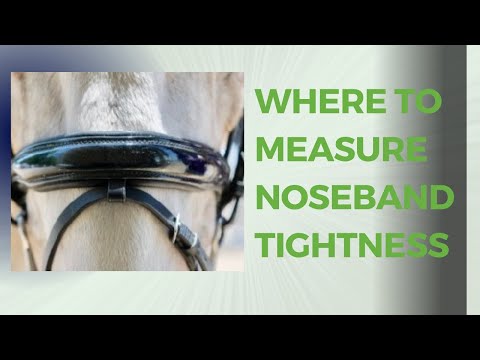
Noseband fit has received significant scientific attention in recent years, and the findings are consistent: tight nosebands are associated with stress responses, increased eye white, ear position changes indicating discomfort, and interference with normal jaw function. The current evidence-based recommendation is a minimum of two fingers of space between the noseband and the horse's face.
For a plain cavesson noseband (most common in English and western riding), position it approximately two fingers below the facial crest (the prominent cheekbone). It should be centered on the nose and lie flat. A drop noseband sits below the bit in the chin groove and must be fitted carefully — too tight and it restricts breathing; too low and it interferes with the bit.
If a horse opens its mouth, evades the bit, or shows resistance in contact, the instinct to tighten the noseband to "control" the behavior is counterproductive. Mouth opening is a signal of discomfort or training gap — neither is solved by increasing noseband pressure. Investigate the cause of the behavior rather than masking the symptom.
Ear Channels and Comfort Cuts
On bridles with a brow-band-to-crownpiece construction, ensure the channel where the crownpiece feeds through the browband allows the leather to sit without pinching. On bridles with separate ear loops or cutouts, verify the ear sits comfortably in the loop without the leather pressing on the base of the ear — a common source of sensitivity and head-shaking. Run your fingers along every piece of leather that contacts the horse's skin before bridling and after removing the bridle each session to check for new rubs or pressure points.
Checking Fit After Every Session
Horses' weight and muscle condition change with season, workload, and age. A bridle that fitted correctly in summer may be too tight or too loose in winter. Check bridle fit formally at least every three months, and whenever you notice any change in the horse's willingness to be bridled, its head carriage, its response to rein contact, or any sign of skin irritation around the head.
Watch & Learn



Need More Help?
Get a personalized plan or find a trainer near you.