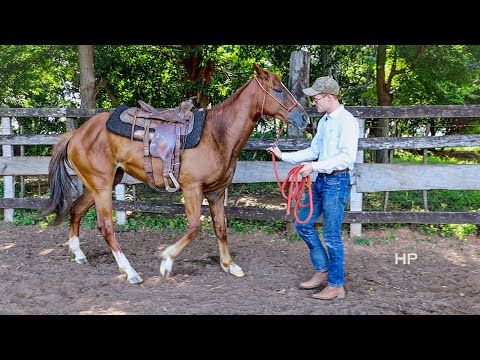
Teaching a horse to back from halter pressure for the first time follows the same pressure-and-release principle as every other groundwork exercise, but it requires particular patience from the handler because the horse's instinctive response to forward pressure on the halter is almost never backward movement — it is bracing, raising the head, or moving sideways. The handler must be prepared to maintain steady light pressure through a series of wrong answers before the horse discovers the correct one.
Position yourself directly in front of the horse at a safe distance — close enough to apply pressure through the lead rope but far enough that you are not in striking range if the horse throws its head. Apply gentle steady backward pressure on the lead rope toward the horse's chest, or rhythmically pulse the pressure in a slow one-two-one-two rhythm. The horse will likely raise its head and brace initially. Do not escalate to pulling — maintain the light contact and wait.
The moment the horse shifts its weight backward even slightly, or takes even one step back, release all pressure instantly and completely. Allow the horse to stand and process. Most horses figure out that backward movement produces the release within a handful of repetitions in the first session, and the quality of the backup improves rapidly from that point — from one reluctant step to two, then several, then an easy soft backup from a feather-light feel on the rope.
Alternatively, some trainers teach the initial backup using a gesture toward the horse's chest with the free hand — a pointing or pushing motion that suggests backward movement — combined with the lead rope pressure. The gesture gives the horse an additional piece of information about the desired direction that some horses find clarifying in the early stages.