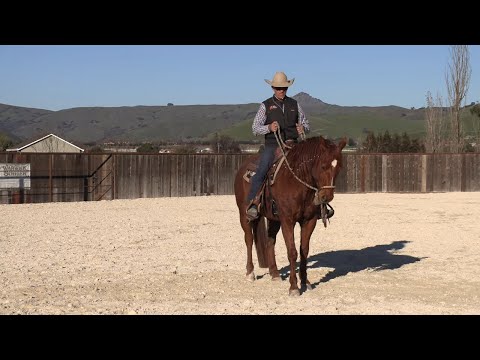
The handler's body position when backing a horse on the ground is more important than most people realize, and incorrect positioning is one of the most common reasons that backup training stalls or produces a crooked, evasive response. The handler's body communicates direction and intent through spatial pressure, and if that spatial pressure is pointing in a different direction from the halter pressure, the horse receives conflicting information.
For a direct-facing backup — the most common teaching position — stand squarely in front of the horse, facing the horse, with your weight equally distributed and your body oriented toward the horse's chest. This position applies spatial pressure that reinforces the backward direction the halter pressure is asking for. Standing off to one side while trying to back the horse straight sends mixed messages — the spatial pressure points sideways while the halter pressure points backward, and the horse compromises between the two.
As the backup becomes established and the handler wants to back the horse from beside it rather than in front of it — which is the more practical and safer long-term position — the transition is made by applying backward pressure on the lead rope while walking with the horse, positioning the handler's body at the horse's shoulder and using a pointed gesture toward the horse's nose or a rhythmic backward feel on the rope to maintain the backward movement.
Hand position matters too. Holding the lead rope close to the snap and applying pressure with a bent elbow that straightens as pressure is applied — rather than pulling with a straight arm from a distance — gives the handler much better feel and timing. The release can be executed faster and more completely from this position, which is the single most important variable in the quality of the backup the horse develops.