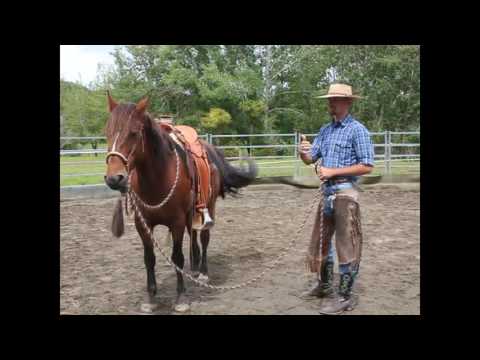
Directing the horse's hindquarters versus its forequarters through body position requires the handler to understand that these two ends of the horse respond differently to pressure from different positions, and that precise positioning of the handler relative to each end produces predictable, reliable responses that form the basis of lateral control from the ground.
To move the hindquarters away — the foundational hindquarter yield exercise — the handler positions themselves at the horse's hip, facing the hindquarters, and applies directed energy or pressure toward the hindquarter zone. The horse's instinct when pressure is applied to this area is to swing the hindquarters away from the source of pressure, pivoting around the forequarters. The handler's body position must be behind the horse's drive line — past the girth point toward the hindquarters — to affect the hindquarters rather than driving the whole horse forward.
To move the forequarters away — the forehand yield — the handler positions themselves ahead of the drive line, at or in front of the horse's shoulder, and applies directed pressure toward the shoulder and neck area. The horse's response to pressure from this position is to move its front end away while the hindquarters remain relatively stationary as the pivot point. The key is that the handler is ahead of the drive line, applying pressure from a position that can only be resolved by the front end moving rather than the whole horse going forward.
Precision in these exercises — being able to move the hindquarters without moving the forequarters and vice versa — requires precise body position control from the handler. Even a few steps too far forward or backward shifts the pressure from one end of the horse to the other and produces a different response. Experienced handlers can control both ends of the horse independently through body position alone, which is the foundation of lateral work from the ground and ultimately of lateral movements under saddle.