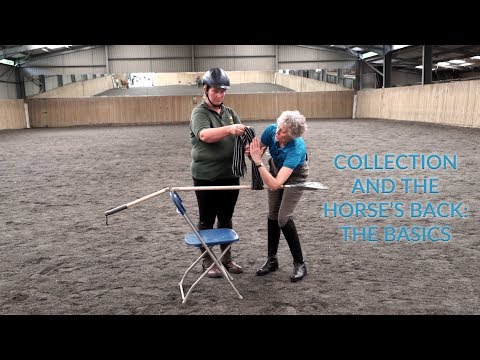
Collection is one of the most misunderstood concepts in horse training — often confused with a forced head position when it is actually a dynamic balance in which the horse carries more weight on its hindquarters, lightens its forehand, and becomes more maneuverable and responsive to the rider's aids. True collection cannot be imposed from the front through rein pressure alone; it must be developed from behind through exercises that strengthen the hindquarters, develop engagement, and teach the horse to compress its frame willingly rather than being pulled into shape. The progression from basic softness through lateral work, transitions, and eventually the collected gaits required in western performance, reining, dressage, and working equitation is a systematic process that takes months or years depending on the horse's physical development and training quality. The questions and answers below address collection from its foundational principles through the specific exercises, bit progressions, and common problems that riders encounter at every stage of development, drawing on the methods of trainers across multiple disciplines who approach collection as an athletic and communicative goal rather than a cosmetic one.
All Questions
62 answersQ 01 of 62
What is lateral flexion and why is it a building block for collection?
Lateral flexion is the horse's ability to bend its neck and body softly to either side in response to rein pressure, and it is one of the earliest and most important lessons a trainer establishes with a young or green horse. The reason it matters so much as a foundation…
Read full answer →Q 02 of 62
How do I use transitions to develop collection in my horse?
Transitions are among the most powerful tools available to a trainer working toward collection, and they are underused by the majority of riders who think collection is achieved primarily through rein contact and frame. The truth is that a horse builds the strength, balance, and responsiveness necessary for genuine collection…
Read full answer →Q 03 of 62
What role does bit selection and rein contact play in developing a correct head set?
Bit selection and rein contact are supporting factors in developing a correct head set rather than the primary drivers — a distinction that is easy to understand intellectually but frequently violated in practice. Many riders chase the head set through equipment first, believing that the right bit or the right…
Read full answer →Q 04 of 62
What exercises best develop a correct and consistent head set in a western performance horse?
The exercises that develop a correct and consistent head set in a western performance horse are the same exercises that develop the engagement, balance, and topline musculature upon which genuine head carriage depends. This is why the most effective head set trainers are also the most thorough foundation trainers —…
Read full answer →Q 05 of 62
What is a light-mouthed horse and how do you develop one?
A light-mouthed horse is one that responds to the smallest possible rein aid — a closing of the fingers, a slight weight in the reins, a whisper of contact — with an immediate, soft, willing response. The lightness is not a physical characteristic of the horse's mouth anatomy but a…
Read full answer →Q 06 of 62
What is meant by the term move off my leg?
Move off my leg is one of those foundational phrases in horsemanship that gets used constantly but explained rarely, and riders who don't fully understand what it means spend years wondering why their horses feel unresponsive, dull, or resistant to what seem like clear requests. At its most basic, moving…
Read full answer →Q 07 of 62
What is the half-halt and how do I use it?
The half-halt is one of the most important and most discussed tools in all of riding — described in classical horsemanship texts as the most important single aid — and one of the most difficult to define precisely because its effect is subtle, its timing is critical, and its quality…
Read full answer →Q 08 of 62
How do you use your legs and reins together to introduce a horse to collection?
Introducing a horse to collection requires understanding that the legs and reins must work together as a coordinated system rather than independently, and that the legs are the more important half of that partnership. The most common mistake riders make when introducing collection is to reach for the reins first…
Read full answer →Q 09 of 62
How do you collect and extend the stride at the same time?
The question itself contains the key insight that most riders miss — collection and extension are not opposites that cannot coexist, they are two ends of the same spectrum that are developed together and that each make the other more available. A horse cannot truly extend without collection to draw…
Read full answer →Q 10 of 62
What is collection in a horse and how is it achieved?
Collection is one of the most discussed and least understood concepts in horsemanship, and the confusion surrounding it produces horses that are falsely framed through equipment and mechanical aids rather than genuinely collected through correct training. Understanding what collection actually is — and equally important, what it is not —…
Read full answer →Q 11 of 62
What body language is involved in a flying change?
The body language of a flying change is one of the most refined and most misunderstood aspects of the movement. The most correct and most elegant flying changes are produced by a rider whose body language communicates the change so clearly and completely that the leg and rein aids become…
Read full answer →Q 12 of 62
Why should you refine your collection cues at the walk and trot before proceeding to the canter?
The principle of refining collection cues at the walk and trot before introducing them at the canter is one of the clearest expressions of progressive training logic available, and the trainers who follow it consistently produce horses with far better collected canters than those who attempt to shortcut the sequence.…
Read full answer →Q 13 of 62
How do I get my horse to bend at the poll?
Bending at the poll — where the horse flexes at the very top of his neck just behind his ears, bringing his face toward vertical with a soft, relaxed jaw — is one of the hallmarks of a correctly trained horse and one of the clearest indicators of genuine collection.…
Read full answer →Q 14 of 62
Why is it important to teach collection first at a walk?
Teaching collection at the walk before introducing it at the trot or lope is not simply a matter of starting with the easiest gait and working up to harder ones — it reflects a fundamental understanding of how horses learn, how muscles develop, and how the quality of training in…
Read full answer →Q 15 of 62
How do I teach shoulder-in and why is it considered the foundation of all lateral work?
Shoulder-in is widely regarded as the most important lateral exercise in classical horsemanship, and that reputation is well earned. The movement asks the horse to travel on three tracks — the outside hind following the outside front, the inside hind stepping into the track left by the outside front, and…
Read full answer →Q 16 of 62
What is lateral flexion and why is it a building block for collection?
Lateral flexion is the horse's ability to bend its neck and body softly to either side in response to rein pressure, and it is one of the earliest and most important lessons a trainer establishes with a young or green horse. The reason it matters so much as a foundation…
Read full answer →Q 17 of 62
The horse won't flex at the poll and is having problems with collection what should be done?
A horse that won't flex at the poll and is struggling with collection is almost always showing you the same problem from two different angles — because poll flexion and collection are not separate issues but deeply interconnected expressions of the same underlying state of the horse's body and mind.…
Read full answer →Q 18 of 62
Explain the purpose of the training order leg-yield shoulder-in haunches-in half-pass?
The sequence of leg-yield, shoulder-in, haunches-in, and half-pass represents one of the most intelligently organized progressions in all of classical horsemanship — a training order in which each movement builds on what the preceding one has developed and introduces one additional dimension of difficulty that prepares the horse for the…
Read full answer →Q 19 of 62
How do you develop a correct and balanced walk-to-trot transition?
The walk-to-trot transition is one of the most frequently performed and most frequently neglected exercises in everyday riding, and the quality of this transition is one of the clearest indicators of a horse's overall training level. A correct walk-to-trot transition is prompt, balanced, and smooth — the horse steps into…
Read full answer →Q 20 of 62
How to teach a horse shoulder-in on a circle?
Teaching shoulder-in on a circle — sometimes called shoulder-fore on a circle or curved shoulder-in — is a more advanced and more specifically demanding version of the shoulder-in exercise that takes the movement off the straight long side and places it on a curved track, requiring the horse to maintain…
Read full answer →Q 21 of 62
Explain the purpose of the training order leg-yield shoulder-in haunches-in half-pass?
The sequence of leg-yield, shoulder-in, haunches-in, and half-pass represents one of the most intelligently organized progressions in all of classical horsemanship — a training order in which each movement builds on what the preceding one has developed and introduces one additional dimension of difficulty that prepares the horse for the…
Read full answer →Q 22 of 62
What is the relationship between impulsion, leg pressure, and rein softness in developing collection?
The relationship between impulsion, leg pressure, and rein softness in collection training is best understood as a circuit — energy generated by the hindquarters through impulsion flows forward through the horse's body, is received and redirected by soft, elastic rein contact, and returns to the hindquarters in the form of…
Read full answer →Q 23 of 62
Can you explain the Training Scale rhythm suppleness contact impulsion straightness collection?
The Training Scale is the classical framework that organizes the progressive development of the horse's athletic education into six interconnected qualities that build on each other in a specific sequence — each one providing the foundation that the next requires, and each one both supported by and expressed through all…
Read full answer →Q 24 of 62
How can I get my horse to extend?
Extension — the ability of the horse to lengthen his stride and increase his ground cover at any gait while maintaining rhythm, balance, and the through connection between hindquarters and hand — is a quality that cannot be demanded or forced but must be developed through the systematic gymnastic work…
Read full answer →Q 25 of 62
How difficult is it to teach a horse to piaffe and what does the process involve?
Teaching a horse to piaffe — the highly collected trot in place where the horse trots with maximum engagement and elevation of the hindquarters while moving forward only minimally or not at all — is one of the most demanding achievements in classical dressage training and one of the clearest…
Read full answer →Q 26 of 62
Do flying changes require collection similar to shoulder-in?
Flying changes and shoulder-in both require collection, but they require it in different ways and to different degrees. The collection required for shoulder-in is primarily lateral — the ability to bend through the body, engage the inside hind in a carrying role, and travel on two tracks while maintaining rhythm…
Read full answer →Q 27 of 62
What are the keys to developing a correct head set in a horse?
A correct head set is one of the most pursued and most misunderstood goals in western performance riding, and the frustration many riders experience in trying to achieve it comes directly from approaching it backward. The head set is a result — the visible end product of correct training, balance,…
Read full answer →Q 28 of 62
My horse is always testing the bit, what can I do?
A horse that constantly mouths, fidgets, chomps, or evades the bit is communicating something, and the first and most important step is figuring out what that something is before reaching for a training solution. Bit fussiness has several distinct causes — some physical, some equipment-related, some behavioral — and treating…
Read full answer →Q 29 of 62
How do you increase impulsion and forward energy in a horse?
Increasing impulsion is one of the most fundamental and most frequently needed corrections in training, and understanding what impulsion actually is — and what it is not — determines whether the trainer's approach produces genuine forward energy or merely more speed. Impulsion is not pace; it is the quality of…
Read full answer →Q 30 of 62
Is a slack rein and gentle contact good?
The distinction between a slack rein and gentle contact is one of the most important and most consistently confused concepts in all of horsemanship, and clarifying it resolves a significant source of misunderstanding about what correct contact actually means and what its relationship is to lightness, collection, and the quality…
Read full answer →Q 31 of 62
What is meant by gentle contact?
Gentle contact is one of those phrases used constantly in riding instruction that means very different things depending on who is saying it and what they are trying to communicate. At its most precise, gentle contact means a consistent, elastic, following feel between the rider's hands and the horse's mouth…
Read full answer →Q 32 of 62
What is counter-canter and how do you ride it?
Counter-canter is one of the most valuable and most systematically misunderstood exercises in all of riding — valuable because of the specific collection, balance, and self-carriage it develops in the horse, and misunderstood because many riders treat it as an advanced movement reserved for horses in formal dressage training when…
Read full answer →Q 33 of 62
How do we get the horse to engage his hindquarters?
Engaging the hindquarters is the central goal of virtually all serious horse training, because the hindquarters are the engine of the horse — the source of the power, the collection, and the self-carriage that distinguishes a genuinely trained horse from one that is merely going through the motions of correct…
Read full answer →Q 34 of 62
How do I maintain a slow lope in a circle?
A slow, collected lope in a circle is one of the most useful and most difficult things to develop in a western horse — and it's the foundation of everything from reining to ranch riding to trail classes. Most horses want to either speed up or break down to a…
Read full answer →Q 35 of 62
How do I get my horse to turn on the haunches?
The turn on the haunches is a foundational lateral movement in western and classical horsemanship that asks the horse to pivot his forehand around his hindquarters — specifically around his inside hind leg, which acts as the pivot point while the horse moves his front end through an arc of…
Read full answer →Q 36 of 62
How do you teach a horse to give to the bit?
Teaching a horse to give to the bit is the most fundamental lesson in all of ridden training, and every other aspect of communication through the reins — collection, lateral flexion, direction, pace control — depends on the horse understanding and accepting this basic concept. A horse that gives to…
Read full answer →Q 37 of 62
How to fix a horse that is overbent even at a walk?
A horse that is overbent — carrying his nose significantly behind the vertical, curling his neck inward, and bringing his face toward his chest — is one of the most common results of well-intentioned but incorrect training. The overbent horse at the walk is a particularly clear signal that the…
Read full answer →Q 38 of 62
How do I know if my bit is not fitting correctly?
Bit fit is one of those things that significantly affects how a horse goes under saddle, yet it gets far less attention than saddle fit, shoeing, or training in most recreational and even competitive barns. A horse that is resistant, head-tossing, above the bit, behind the bit, or inconsistently soft…
Read full answer →Q 39 of 62
What is counter canter and how does it build collection and balance?
Counter canter is the deliberate act of loping on the outside lead — left lead while traveling on a right circle, or right lead on a left bend — as an intentional gymnastic exercise rather than as an error. It requires the horse to maintain its balance, rhythm, and lateral…
Read full answer →Q 40 of 62
What is involved in creating a good head set on a horse?
The term head set is one of the most commonly used and most frequently misunderstood concepts in western riding, and addressing it honestly requires distinguishing between what a correct head position actually is, what produces it, and why the head set that results from correct training is fundamentally different from…
Read full answer →Q 41 of 62
What are the keys to making a horse round?
Roundness in a horse is one of those terms that gets used constantly in training circles and understood inconsistently — because what roundness actually means at a deep level is different from what it looks like on the surface. True roundness is not a head position. It is a whole-body…
Read full answer →Q 42 of 62
Why should you avoid overdoing collection training lessons and how do long trail rides benefit the horse?
Collection training is physically and mentally demanding work, and one of the most common mistakes riders make when they discover genuine progress in collection is to pursue it too intensively — working on it every session, for longer periods each time, and pushing for more refined responses before the horse…
Read full answer →Q 43 of 62
Explain half-halts transitions and what the purpose is?
The half-halt is one of the most important and most misunderstood concepts in all of riding — misunderstood because the name suggests stopping, when the reality is that a half-halt has nothing to do with stopping and everything to do with reorganizing, rebalancing, and reestablishing communication between horse and rider…
Read full answer →Q 44 of 62
What are the steps to get the horse to achieve balance at the walk and trot?
Achieving genuine balance at the walk and trot is one of the most foundational goals in horse training and one that is more complex than it initially appears, because balance in a horse is not a static state that is achieved once and maintained automatically — it is a dynamic…
Read full answer →Q 45 of 62
What are the most common mistakes in developing the collected trot and how do you correct them?
The collected trot is one of the exercises where incorrect training produces results that look superficially similar to correct results while representing fundamentally different and problematic training, and recognizing the most common mistakes — and their corrections — prevents months of work that produces the wrong qualities. The most prevalent…
Read full answer →Q 46 of 62
Do I use my legs or hands more for collection of my horse?
The answer is legs — unambiguously and without qualification — and understanding why changes the way you ride everything, not just collection. The hands finish the conversation that the legs start, but if your legs are not creating the energy and engagement in the first place, your hands have nothing…
Read full answer →Q 47 of 62
How do you teach a horse a collected canter?
Teaching a collected canter is the culmination of the collection work built through months of walk and trot training, and it follows the same fundamental principles that govern all collection development — engagement from behind, forward energy redirected upward rather than suppressed, and a soft rein that receives rather than…
Read full answer →Q 48 of 62
How do you teach a horse to break at the poll correctly during collection training?
Breaking at the poll — the horse flexing at the topmost joint of the neck, just behind the ears, so that the face approaches the vertical and the neck arches naturally from the base — is the physical expression of correct poll flexion and is one of the most visible…
Read full answer →Q 49 of 62
What are some key points to improve the collection of my horse?
Collection is one of the most misunderstood concepts in horsemanship because it's often described as something you do to the front end of the horse when it's actually something you build from the back end forward. A truly collected horse is not a horse whose head has been pulled into…
Read full answer →Q 50 of 62
The horse is leaning on the rider's hands what can be done?
A horse that leans on the rider's hands — that pushes steadily into the contact, rests weight against the bit, and transfers the responsibility for carrying his own front end to the rider's arms rather than to his own hindquarters — is one of the most common and most physically…
Read full answer →Q 51 of 62
The horse is heavy on the forehand what should we do?
A horse that is heavy on the forehand is one of the most common training challenges in all of riding and one of the most important to address correctly, because the forehand-heavy way of going creates a cascade of problems that affect every aspect of the horse's performance and long-term…
Read full answer →Q 52 of 62
How can I train my horse to drop its head under saddle?
Teaching a horse to lower his head on cue under saddle — to release through the poll and jaw and carry his head in a lower more relaxed position in response to a specific rein or seat aid — is one of the most commonly sought training outcomes in western…
Read full answer →Q 53 of 62
Is it ok to ride my horse behind the bit?
Riding behind the bit is not collection, and it is not okay as a training goal or an acceptable way to carry a horse — though it is extremely common, often unintentional, and frequently mistaken for correct headset by riders who are evaluating their horses visually rather than through feel.…
Read full answer →Q 54 of 62
How do I get my horse to quit tossing its head and what kind of tack do I need?
Head tossing is one of those problems that frustrates riders enormously because it disrupts every ride, makes the horse uncomfortable to handle, and looks bad in the pen — but it is almost never a training problem in isolation. Before you change a single piece of tack or try a…
Read full answer →Q 55 of 62
What are the keys to developing a correct collected trot?
The collected trot is one of the most demanding and most rewarding movements in a horse's training, and developing it correctly requires patience, progressive gymnastic work, and a clear understanding of what genuine collection at the trot looks like versus what a simply slow or compressed trot looks like. These…
Read full answer →Q 56 of 62
How do you use the walk-to-trot transition to develop collection and engagement?
The walk-to-trot transition is one of the most powerful collection-building exercises available precisely because it requires the horse to reorganize his balance and generate new energy at the moment of departure — and the quality of that reorganization reflects and develops the degree of engagement in the hindquarters. Used thoughtfully,…
Read full answer →Q 57 of 62
What is the difference between a horse that is collected and one that is simply slow?
This is one of the most important distinctions in all of horsemanship, and it is a question that trips up riders at every level. Collection is frequently misunderstood as simply slowing a horse down, compressing its frame, or shortening its stride. In reality, a truly collected horse is not moving…
Read full answer →Q 58 of 62
Explain having soft hands at the walk?
Soft hands at the walk encompasses a nuanced and specific quality of rein management that is quite different from simply holding the reins loosely or maintaining a light contact. The walk is the gait that reveals hand quality most clearly and most honestly, because the walk's four-beat footfall includes a…
Read full answer →Q 59 of 62
My horse keeps tossing its head in circles what can be done it is not physical already vet checked?
A horse that tosses his head specifically in circles is giving you precise diagnostic information that narrows the cause considerably. If the head tossing were primarily about the bit or general sensitivity, you would expect to see it across all work rather than specifically in circles. The fact that circles…
Read full answer →Q 60 of 62
What is the purpose of shoulder-in training exercise?
Shoulder-in is widely regarded by classical and modern trainers across all disciplines as the single most complete and most consistently useful gymnastic exercise available in horsemanship. Understanding those purposes in depth — not simply that shoulder-in is useful but specifically why it is useful and what it develops that other…
Read full answer →Q 61 of 62
How do you introduce lateral work to a young horse?
Introducing lateral work to a young horse is one of the most important developmental decisions in early training — important because lateral work introduced at the right moment in the right way unlocks the horse's athletic development and communication refinement in ways that no amount of straight-line work can replicate,…
Read full answer →Q 62 of 62
How do I get my horse to move forward into the bit?
A horse that moves forward into the bit is a horse that has learned to seek contact rather than avoid it — and developing that willingness is one of the most rewarding things you can accomplish in training because it transforms the entire feel of riding. Instead of a horse…
Read full answer →📹 Collection & Softness Training Videos