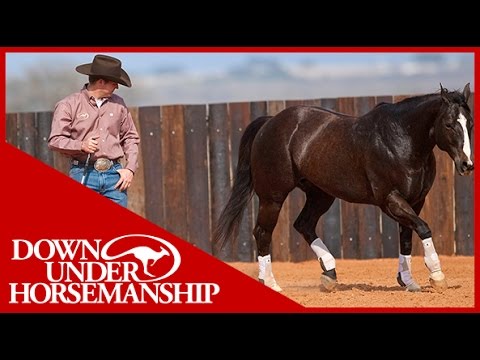
Backing on the ground is one of the most revealing and most useful exercises in all of horsemanship, and the reasons for this go well beyond the practical convenience of a horse that moves backward when asked. At its core, backing requires the horse to yield to pressure in a direction that runs counter to its instinct — horses are prey animals hardwired to move forward away from pressure, not backward into it — and a horse that backs willingly and softly has demonstrated a level of trust and responsiveness that forward-motion exercises alone cannot develop.
From a practical standpoint, backing is used constantly in real-world horse handling: backing out of a trailer, backing away from a gate that swings toward the horse, backing a horse that has crowded into the handler's space, backing out of a tight spot on a trail. A horse that does not back reliably creates problems in all of these situations and more.
From a training standpoint, the backup is one of the clearest tests of whether a horse is truly yielding to pressure or merely tolerating it. A horse that backs softly, straight, and from a light cue, with its hindquarters engaged and its back swinging, is a horse that has a genuine understanding of pressure-and-release communication. A horse that raises its head, stiffens its neck, plants its feet, or swings its hindquarters to avoid the exercise is showing exactly where the training gaps are — and those gaps will show up in every other exercise as well.
Clinton Anderson, Ken McNabb, and virtually every systematic horsemanship trainer prioritize backup as a foundational exercise precisely because it exposes and addresses resistances that other exercises allow the horse to evade. You cannot bluff your way through a backup — the horse either yields rearward or it doesn't.