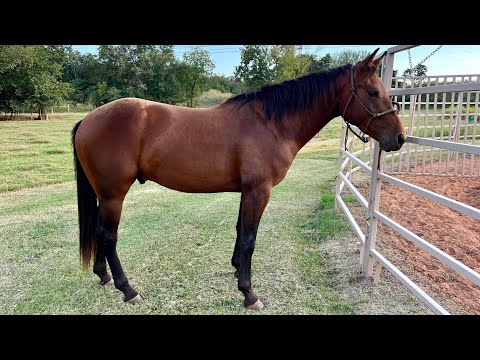
Groundwork and longing are the foundation of every well-trained riding horse, developing responsiveness to pressure, forward willingness, body control, and the handler relationship that all subsequent training builds upon. A horse that can be directed from the ground with precision — stopping, backing, yielding hindquarters and shoulders, moving forward willingly, and respecting the handler's space — arrives at under-saddle training with the communication tools already in place. Longing, when done correctly, develops rhythm, balance, and muscular fitness while giving the handler an opportunity to observe and influence the horse's way of going from the outside. Done incorrectly, longing becomes mindless circle-making that bores the horse, strains its joints, and accomplishes nothing for either development or the handler's understanding. The answers below address both foundational groundwork exercises and correct longing technique, drawing on the methods of leading natural horsemanship practitioners to provide specific, purposeful guidance for every stage of groundwork development.
All Questions
39 answersQ 01 of 39
What does Parelli mean by 'feel, timing, and balance' and how do you develop these qualities in groundwork?
Feel, timing, and balance are the three qualities that Pat Parelli identifies as the hallmarks of a truly skilled horseman, and he teaches that they cannot be instructed in the conventional sense — they can only be developed through experience and awareness. His foundational teacher Tom Dorrance originated these concepts,…
Read full answer →Q 02 of 39
What is a rump rope and how do you use it in horse training?
A rump rope is a simple but highly effective training tool — a rope or soft cord that is looped around the horse's hindquarters, just above the hocks, and used to teach the horse to move forward from pressure applied from behind rather than from pulling on the lead rope…
Read full answer →Q 03 of 39
How do I get a horse to respect my space on the ground?
A horse that crowds, pushes, or walks over the handler is not being affectionate — it is testing boundaries in the same way it tests other horses in a herd, and a handler who tolerates it is teaching the horse that its size and weight are tools that work. Establishing…
Read full answer →Q 04 of 39
How do I teach a horse to respect personal space and stop crowding the handler?
Crowding is one of the most common ground manners problems and it worsens quickly if not addressed because it is self-reinforcing — the horse crowds, the handler backs up or does nothing, and the horse learns its size is an effective tool. The correction process is straightforward but requires nerves…
Read full answer →Q 05 of 39
How do I teach a horse to lead correctly on a lead rope?
A horse that leads correctly walks beside the handler with slack in the lead rope, stops when the handler stops, and does not lag, rush, or drift into the handler's space. Teaching it requires that you be clear about what correct looks like and consistent about correcting everything that is…
Read full answer →Q 06 of 39
What groundwork exercises are best for a beginner horse handler just starting out?
A handler new to groundwork is learning body language, pressure and release, and timing simultaneously — and those skills develop faster on a calm, experienced horse than on a green or difficult one. If possible, begin your groundwork education on a horse that already knows the exercises, so you can…
Read full answer →Q 07 of 39
My horse won't lunge and just stops or turns in — how do I fix it?
A horse that stops on the lunge line or consistently turns in toward the handler has learned that those behaviors end the exercise, and in most cases the handler inadvertently taught it. If the horse turns in and the handler pets it, gives it a rest, or simply lets it…
Read full answer →Q 08 of 39
What ground exercises develop a horse's responsiveness to leg and seat aids before riding?
Several ground exercises directly simulate and prepare the horse for the leg and seat aids he will encounter under saddle, creating a physical and mental vocabulary that makes the transition to ridden work significantly smoother. The goal of these exercises is to teach the horse to move specific parts of…
Read full answer →Q 09 of 39
How do you use groundwork to fix a horse that is disrespectful or pushy on the ground?
Disrespectful and pushy behavior on the ground — crowding the handler's space, walking ahead on the lead, pushing through the handler, not stopping when asked — is something Clinton Anderson, Pat Parelli, and Warwick Schiller all address as a leadership and communication problem rather than a discipline problem. The distinction…
Read full answer →Q 10 of 39
How do I use a round pen to train a horse?
The round pen is one of the most powerful tools in a horseman's foundation work because the absence of corners removes the horse's ability to evade direction changes and the enclosed space allows communication through body position without a rope. Its value is entirely in how it is used —…
Read full answer →Q 11 of 39
Explain the keys to round pen sizing from 40 to 70 feet?
Round pen sizing has real consequences for what you can accomplish in the pen and how the horse moves and responds within it. The range from forty to seventy feet covers most round pens in use today, and each size within that range has specific strengths, limitations, and ideal applications.…
Read full answer →Q 12 of 39
When longeing how do I deal with rebellion?
Rebellion on the longe line is one of the most common and most mismanaged problems in horse handling, and correctly identifying what is actually happening is what allows the handler to respond effectively rather than simply escalating pressure. What looks like rebellion from the handler's perspective is almost always something…
Read full answer →Q 13 of 39
What is the difference between longing for obedience and longing for exercise, and why does the distinction matter?
The distinction between longing for obedience and longing for exercise is one that Clinton Anderson addresses specifically, and it matters because the two activities have completely different outcomes — and most people who think they are doing one are actually doing the other. Longing for exercise means trotting or cantering…
Read full answer →Q 14 of 39
How do I correctly lunge a horse, and what should I be accomplishing during a lunge session?
Lungeing is one of the most widely used and widely misused tools in horsemanship. Done correctly, it is a gymnastic exercise that develops balance, rhythm, and obedience while allowing the trainer to observe the horse's movement from the ground. Done incorrectly — which usually means chasing the horse in endless…
Read full answer →Q 15 of 39
How do you use proximity and position to motivate a lazy horse when longeing?
Working with a lazy horse on the longe requires understanding a fundamental principle of equine spatial communication: the horse's movement is directly influenced by where the handler stands relative to the horse's body, and deliberately manipulating that position is one of the most effective tools available for creating and maintaining…
Read full answer →Q 16 of 39
How do I lunge a horse correctly?
Lunging done correctly is a gymnastic and communication exercise — done incorrectly it is simply tiring a horse in circles, which produces a fit but no more obedient horse and puts unnecessary stress on joints. The foundation of correct lungeing is that the horse responds to your body position and…
Read full answer →Q 17 of 39
What are the best groundwork exercises for beginners?
Beginner groundwork should focus on the four responses every horse needs to give a handler reliably before mounted work becomes safe and productive: move forward, stop, back up, and yield the hindquarters. These are not tricks or advanced techniques — they are the basic vocabulary between horse and handler, and…
Read full answer →Q 18 of 39
What is the benefit of a five-stride line exercise?
The five-stride line is one of the most fundamental and most productive exercises in all of jumping training, and its value extends far beyond simply practicing jumping two fences in a row. A properly ridden five-stride line teaches the horse and rider to establish rhythm, maintain straightness, regulate stride length,…
Read full answer →Q 19 of 39
How do I use groundwork to prepare a spooky horse for riding?
A spooky horse ridden before its anxiety has been addressed on the ground is a horse that puts the rider at unnecessary risk, because whatever the horse cannot manage emotionally on the ground will be amplified under saddle. Groundwork before riding on a spooky day serves two purposes: it assesses…
Read full answer →Q 20 of 39
Why is it best to keep longeing lessons short?
Keeping longeing sessions short is one of the most important and most frequently ignored principles in ground training, and the consequences of excessively long longe sessions — on the horse's joints, mental engagement, and overall training progress — are significant enough that experienced trainers treat session length as a deliberate…
Read full answer →Q 21 of 39
Warwick Schiller emphasizes doing less in groundwork — what does he mean and why does it matter?
Warwick Schiller's emphasis on doing less in groundwork is a response to what he identifies as the most common error in modern horsemanship practice: doing more than the horse can process, which produces compliance without genuine learning and eventually creates horses that are dull, mechanical, or shut down rather than…
Read full answer →Q 22 of 39
What are the key benefits of longeing a horse correctly?
Longeing, when done correctly, is one of the most versatile and valuable tools in a horse trainer's program. It develops the horse's balance, rhythm, and muscling on a circle, improves responsiveness to voice commands, and gives the trainer a clear view of how the horse moves — information that is…
Read full answer →Q 23 of 39
How do I use groundwork to help a spooky or anxious horse become calmer?
Groundwork is one of the most effective tools for reducing spookiness because it gives you a way to work the horse through fear in a controlled environment where you are not also managing your own safety in the saddle. The goal is not to eliminate the horse's sensitivity — a…
Read full answer →Q 24 of 39
Why does Clinton Anderson say groundwork is the foundation of everything else in horse training?
Clinton Anderson's position that groundwork is the foundation of everything else in horse training is not rhetorical — it is a functional description of how the specific communication, obedience, and respect established on the ground transfer directly to the same qualities under saddle. His reasoning is grounded in the mechanics…
Read full answer →Q 25 of 39
Explain the benefits of using figure eight patterns in training?
The figure eight is one of the most deceptively simple and most productively versatile patterns in all of horse training, and its consistent appearance across disciplines reflects the specific and significant benefits it produces that simpler patterns cannot replicate as efficiently. At its most basic, a figure eight is two…
Read full answer →Q 26 of 39
Is lunging bad for young horses?
Lunging is not inherently bad for young horses, but it carries genuine physical risks when done incorrectly, too intensively, or too early on horses whose musculoskeletal systems are not yet developed enough to handle the demands of repetitive circle work. The primary concern is the centrifugal force placed on the…
Read full answer →Q 27 of 39
What are Pat Parelli's Seven Games and how do they function as a groundwork system?
Pat Parelli's Seven Games are a structured progression of groundwork exercises designed to establish complete two-way communication between horse and handler before riding begins. Each game addresses a specific type of interaction, and together they cover all the fundamental yields, drives, and relationship dynamics that produce a horse that is…
Read full answer →Q 28 of 39
What are the most important things to watch for in a horse's body language during groundwork?
Reading a horse's body language during groundwork is a skill that Clinton Anderson, Pat Parelli, and Warwick Schiller all teach as foundational to effective training, because the horse is communicating constantly about its emotional state, its level of understanding, and its willingness — and handlers who miss these signals either…
Read full answer →Q 29 of 39
How does in-hand work prepare a horse for collection under saddle?
In-hand work — exercises performed with the handler on the ground guiding the horse through movements using a bridle, long reins, or specially fitted equipment — is one of the most refined and effective ways to develop collection before asking for it under saddle. Because the handler can position himself…
Read full answer →Q 30 of 39
How often should I do groundwork with my horse?
The right frequency of groundwork depends on what you are trying to accomplish and where the horse is in its training. For a horse with established ground manners that you ride regularly, formal groundwork sessions are less critical — the ground responses stay sharp through consistent handling during grooming, tacking,…
Read full answer →Q 31 of 39
What groundwork exercises does Warwick Schiller recommend for building connection rather than just obedience?
Warwick Schiller's approach to groundwork has shifted significantly in recent years from a primarily obedience-based framework toward what he describes as connection-oriented work — exercises whose goal is not compliance with a command but the development of a genuine, voluntary relationship between horse and handler. His distinction is subtle but…
Read full answer →Q 32 of 39
How do I use round pen work to build respect and responsiveness?
Respect in a horse is not fear of the handler — it is the horse's learned understanding that the handler controls the movement of its feet, and that responding to the handler's cues produces relief from pressure. Round pen work builds that understanding efficiently because the handler can direct all…
Read full answer →Q 33 of 39
What are the keys to flatwork?
Flatwork is the foundation of all riding and all performance regardless of discipline — the work done on the flat without jumps, cattle, or speed events that develops the horse's responsiveness, balance, suppleness, and self-carriage that everything else in his athletic education depends on. The term is sometimes used dismissively,…
Read full answer →Q 34 of 39
Explain the importance of longeing and teaching voice commands?
Longeing is one of the most versatile and most valuable tools in horsemanship, and when done with intention and skill rather than simply as a way to tire a horse out before riding, it becomes a complete training system in its own right. The horse that has been correctly longed…
Read full answer →Q 35 of 39
My horse pulls away or drags me on the lunge line — how do I stop it?
A horse that pulls on the lunge line or drifts outward against constant tension has not learned to maintain its own position on the circle — it is either pushing against the pressure habitually or genuinely does not understand that the line has boundaries. The first thing to evaluate is…
Read full answer →Q 36 of 39
What is the correct technique for longing a horse according to Clinton Anderson's Downunder Horsemanship?
Clinton Anderson's longing technique is specific and differs from the passive longing that many horse owners practice. His method is active and communicative, with the handler positioned at a specific angle, using tools in specific ways, and with clear criteria for what constitutes a correct response. The handler's position in…
Read full answer →Q 37 of 39
How do I teach a horse to stop, back up, and yield to pressure on the ground?
These three responses — halt, back, and yield — form the core of ground control and should be installed sequentially because each builds on the previous. The halt comes first. Stop your feet abruptly, say whoa, and wait. If the horse walks past you, do not pull it back with…
Read full answer →Q 38 of 39
How does Clinton Anderson's sending exercise work and why is it important?
Clinton Anderson's Sending Exercise is one of the foundational exercises in his Downunder Horsemanship program, and it teaches the horse to move away from the handler with forward impulsion on direction — the ground equivalent of the leg aid that produces forward movement under saddle. The exercise is simple in…
Read full answer →Q 39 of 39
Explain how to get a young horse started longing in the round pen.
Getting a young horse started on the longe line in the round pen is one of the most foundational steps in early training, and when it is introduced correctly it establishes a communication system that the horse will use and build on for the rest of its working life. The…
Read full answer →📹 Groundwork & Longeing Videos