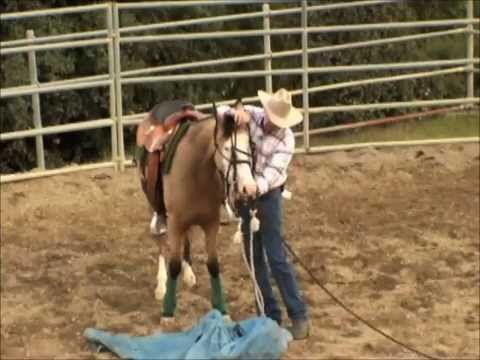
Starting a young horse under saddle is one of the most consequential processes in its training career — the foundation installed in the first weeks and months of riding determines the horse's responsiveness, confidence, and willingness for years to come. Done correctly, with systematic groundwork preparation, progressive under-saddle introduction, and patient development of basic responses before speed or difficulty is added, a young horse arrives at its first competitive or working season with a solid, reliable foundation that makes all subsequent training efficient and enjoyable. Done incorrectly — rushed, skipped in its foundational stages, or managed with force rather than clarity — the young horse develops the defensive behaviors, training holes, and physical compensations that create problems across its entire career. The answers below address every stage of starting young horses, from the appropriate age and physical readiness indicators through the specific groundwork sequences, first ride preparation, and early under-saddle development that leading trainers recommend across multiple disciplines.
All Questions
65 answersQ 01 of 65
How do you handle a young horse that rears during early training and what does it indicate?
A young horse that rears during early training is displaying one of the most dangerous behaviors in horsemanship, and Clinton Anderson's response addresses both the immediate safety concern and the underlying cause that produced it. The immediate safety response to a rear in progress is to lean forward over the…
Read full answer →Q 02 of 65
What is the role of the round pen in starting young horses and can you start a horse without one?
The round pen is one of the most useful tools in starting young horses but not an absolute requirement, and understanding what it does and does not provide helps trainers make appropriate decisions about whether to use one and what to substitute when one is not available. What the round…
Read full answer →Q 03 of 65
How does Pat Parelli's Seven Games system apply to colt starting?
Pat Parelli's Seven Games are the foundational communication framework he uses for all horse training, and for colt starting they represent a systematic way of establishing language and trust with a young horse before anything under saddle is attempted. Each of the Seven Games addresses a specific type of communication…
Read full answer →Q 04 of 65
How do you manage the weaning process to minimize trauma and set up the weanling for future training?
Weaning is one of the most psychologically significant events in a young horse's life, and how it is managed has measurable effects on the horse's behavior, stress responses, and relationship with humans that can persist for years. The traditional abrupt separation — removing the foal from the mare suddenly and…
Read full answer →Q 05 of 65
What age should a horse be started under saddle and what do Anderson, Parelli, and Schiller recommend?
The question of age for starting a horse under saddle is one that Clinton Anderson, Pat Parelli, and Warwick Schiller each address, and while their practical answers are similar, their reasoning reflects their different philosophical frameworks. Clinton Anderson starts horses at two years old in his program, which is consistent…
Read full answer →Q 06 of 65
What should a trainer assess in a young horse's movement and conformation before deciding how to develop it?
Assessing a young horse's movement and conformation before beginning its training development allows the trainer to set realistic expectations, identify potential soundness vulnerabilities before they become problems, and design a training program that works with the horse's natural qualities rather than fighting them. Conformation assessment for training purposes focuses on…
Read full answer →Q 07 of 65
How do you introduce a young horse to new environments during its training?
Introducing a young horse to new environments during its training is one of the most valuable and most frequently skipped steps in colt starting, and the horses that are never taken out of their home environment during training are among the most likely to fall apart when their first show…
Read full answer →Q 08 of 65
How do you handle a colt that is difficult to catch for training sessions?
A colt that is difficult to catch for training sessions is telling you something about the relationship — specifically that the training sessions have a higher ratio of uncomfortable things to comfortable things, and the colt has learned that being caught reliably leads to pressure. Clinton Anderson, Pat Parelli, and…
Read full answer →Q 09 of 65
How do you prevent a young horse from becoming ring sour during its early training?
Ring sourness — the horse becoming dull, resistant, or actively evasive about arena work while remaining better behaved in other environments — is a training problem that develops gradually when arena work becomes the horse's entire training diet, particularly when that arena work is repetitive and monotonous. Clinton Anderson addresses…
Read full answer →Q 10 of 65
How do you teach a young horse to stand quietly at the hitching rail or tie ring without anxiety?
Teaching a young horse to stand tied quietly — to accept restraint at a tie rail or ring without pulling, pawing, weaving, or escalating anxiety — is one of the most practically important skills in its early training and one that has significant safety implications for the rest of its…
Read full answer →Q 11 of 65
How do you know if a young horse has the temperament to be a good performance horse?
Assessing whether a young horse has the temperament for performance work is one of the most practically important evaluations in the starting process, and experienced trainers develop the ability to read temperament indicators early that predict how a horse will handle training pressure, competition stress, and the specific demands of…
Read full answer →Q 12 of 65
How do you deal with a young horse that is extremely mouthy or nippy during training?
Extreme mouthiness or nippiness in a young horse during training — persistent reaching for the handler's clothing, equipment, or body with the lips and teeth — is a behavior that needs consistent correction from the first instance, because horses that learn that mouthiness is tolerated will escalate it over time.…
Read full answer →Q 13 of 65
How do you build forward energy in a young horse that is naturally lazy or dull off the leg?
A young horse that is naturally low-energy or dull in its response to forward-driving aids presents a different starting challenge than a hot, reactive horse, and the specific approach to developing genuine forward energy is one Clinton Anderson addresses directly in his colt starting program. Anderson's diagnosis of a lazy…
Read full answer →Q 14 of 65
How do you work with a young horse that has become herd bound during its time in the pasture?
A young horse that has spent its foal and yearling years primarily in pasture with a herd and minimal human interaction presents a specific starting challenge: the horse's primary social attachment is entirely equine, and the human beginning training is a relative stranger asking the horse to focus on them…
Read full answer →Q 15 of 65
How do you develop collection in a young horse without forcing it?
Developing collection in a young horse is a multi-year process that begins with engagement of the hindquarters and develops progressively through gymnastic work that builds the horse's strength, balance, and willingness to carry itself — and attempting to collect a young horse through forceful positioning is one of the most…
Read full answer →Q 16 of 65
What should you be doing with a foal in its first week of life to set up future training?
The first week of a foal's life is one of the highest-leverage windows in its entire training career because the foal's brain is in a uniquely receptive state — it is imprinting on its environment, forming its first associations with humans, and developing the neural pathways that will determine how…
Read full answer →Q 17 of 65
How does Clinton Anderson handle the first buck on a young horse and how does he prevent future bucking?
Clinton Anderson's approach to the first buck on a young horse starts with prevention rather than correction, and his prevention protocol is thorough enough that bucks on well-prepared colts are genuinely rare in his program. When a buck does occur, his response is immediate and specific. The moment a horse…
Read full answer →Q 18 of 65
When should I start a young horse under saddle?
The question of when to start a young horse is one of the most debated in horsemanship, and the honest answer is that it depends on the individual horse's physical and mental maturity more than its age on paper. The growth plates in a horse's skeleton close at different times…
Read full answer →Q 19 of 65
What are the tips for working with ex-racehorses?
Ex-racehorses are among the most misunderstood horses in the second-career world, and the misconceptions that surround them — that they are all nervous wrecks, that they are too hot to manage, that racing has ruined them for other purposes — are contradicted daily by the thousands of off-track Thoroughbreds and…
Read full answer →Q 20 of 65
What work is appropriate for yearlings and how do you develop a yearling without overloading its developing body?
The yearling year is one of the most misunderstood stages of young horse development because it falls in the gap between the early imprinting work of the foal period and the more structured colt starting of the two or three-year-old — and many horse owners either do nothing with yearlings…
Read full answer →Q 21 of 65
What role does join-up play in starting young horses according to Monty Roberts?
Monty Roberts is the originator of join-up, a concept that has influenced virtually every modern natural horsemanship trainer including Clinton Anderson, Pat Parelli, and Warwick Schiller, even when they use different terminology. Understanding Roberts' original work on join-up is essential background for anyone working with young horses because it explains…
Read full answer →Q 22 of 65
How long should early training sessions be for young horses and how do you know when to quit?
Session length for young horses is one of the most consistently misjudged variables in colt starting, and the error is almost always in making sessions too long rather than too short. Clinton Anderson, Pat Parelli, and Warwick Schiller all advocate shorter, more frequent sessions over longer, less frequent ones —…
Read full answer →Q 23 of 65
What does Clinton Anderson say is the single most important thing to do before the first ride on a colt?
Clinton Anderson is unequivocal on this point: the single most important thing before the first ride is groundwork, and specifically groundwork that confirms the handler has complete control of the horse's feet in all four directions — forward, backward, left, and right — from the ground. His position is that…
Read full answer →Q 24 of 65
How do you handle the first time a young horse spooks under saddle?
The first significant spook a young horse has under saddle is a pivotal moment in its training, and how the rider handles it shapes the horse's future response to frightening stimuli more than almost any other single event in the early training. Clinton Anderson's guidance for riding through a young…
Read full answer →Q 25 of 65
How do you retrain an ex-racehorse for dressage?
Retraining an ex-racehorse for dressage is one of the most rewarding second-career paths available to off-track Thoroughbreds. The Thoroughbred's natural athleticism, sensitivity, willingness to work, and forward energy are qualities that dressage specifically rewards, and the physical and mental characteristics that make a good racehorse — elasticity of movement, responsiveness…
Read full answer →Q 26 of 65
What does Clinton Anderson say about round pen work before backing a colt?
Clinton Anderson's round pen work before backing a colt is one of the most detailed and specific components of his Downunder Horsemanship colt starting program, and he considers it non-negotiable preparation. The round pen serves two distinct purposes in his pre-backing work: it establishes forward movement from the handler's energy,…
Read full answer →Q 27 of 65
What groundwork should a young horse have before the first ride?
The groundwork a young horse needs before the first ride is not a checklist to rush through but a genuine foundation that determines how safe and productive the first rides will be. At minimum, the horse should catch easily and stand to be haltered without evasion, lead quietly beside the…
Read full answer →Q 28 of 65
What are the physical development milestones trainers should know about before starting a young horse?
Understanding the physical development timeline of young horses is foundational to making responsible decisions about when and how hard to push training, and the basic knowledge of growth plate closure and skeletal development is something every trainer and horse owner should have. Growth plates — the cartilaginous areas at the…
Read full answer →Q 29 of 65
What do you do when a young horse in training plateaus and stops making progress?
Training plateaus — periods where a young horse appears to have stopped progressing despite continued training effort — are universal in colt starting and almost always have an identifiable cause when examined carefully. Knowing where to look is the difference between a productive response and weeks of frustrated repetition. The…
Read full answer →Q 30 of 65
How do you get an ex-racehorse to bend?
Getting an ex-racehorse to bend correctly through his whole body is one of the most important and most consistently challenging aspects of the off-track Thoroughbred's retraining, challenging for reasons that are simultaneously physical, neurological, and training-history based. The racehorse that has spent one to three years galloping primarily in one…
Read full answer →Q 31 of 65
What is counter-bending and why is it used in starting young horses?
Counter-bending — asking a horse to bend its nose slightly away from the direction of travel rather than toward it — is a specific suppling and control exercise that Clinton Anderson and other trainers use during the early phases of starting young horses for several practical purposes. The primary use…
Read full answer →Q 32 of 65
How long does it take to start a young horse under saddle?
The timeline for starting a young horse varies enough between individuals that any specific number of days or rides should be treated as a rough guideline rather than a target to hit. The factors that influence the timeline most are the horse's individual temperament, the quality of its earlier handling,…
Read full answer →Q 33 of 65
How do you develop a young horse's suppleness and straightness from the earliest stages of training?
Suppleness and straightness are foundational qualities that become progressively more difficult to develop if neglected early, and both Clinton Anderson and Pat Parelli teach addressing them from the beginning of training rather than treating them as refinements for later. Suppleness — the horse's ability to bend laterally through its body…
Read full answer →Q 34 of 65
What specific ground work should be confirmed before anyone other than the primary trainer rides a young horse?
A young horse that is being started by a professional trainer but will eventually be ridden by its owner or another rider needs to meet specific training standards before that transition is safe, and defining those standards in advance prevents the premature transitions that are a leading cause of setbacks…
Read full answer →Q 35 of 65
How do you know when a young horse is genuinely ready to progress to the next stage of training?
Knowing when a young horse is genuinely ready to progress — rather than appearing ready because it is complying under pressure — is one of the most important judgment calls in colt starting, and the criteria that Clinton Anderson, Pat Parelli, and Warwick Schiller use are behavioral rather than calendar-based.…
Read full answer →Q 36 of 65
What does Anderson say about the importance of teaching a young horse to move away from pressure versus into it?
The distinction between a horse that moves away from pressure and one that moves into pressure — that leans against the halter, pushes into the leg, or braces against the rein — is foundational to everything in horse training, and Clinton Anderson identifies it as the single most important concept…
Read full answer →Q 37 of 65
What is the correct way to introduce a young horse to its first rides?
The first few rides on a young horse are among the most consequential experiences of its life. What happens in those early sessions forms the template for how the horse understands the relationship between rider and horse, how it responds to pressure, and whether it approaches new requests with curiosity…
Read full answer →Q 38 of 65
What is Parelli's Squeeze Game and why is it critical before the first ride?
The Squeeze Game is the sixth of Pat Parelli's Seven Games, and it teaches a horse to confidently move through tight or confined spaces between the handler and an obstacle — a fence, a wall, a trailer door, or eventually between the handler's legs from on top. Parelli considers it…
Read full answer →Q 39 of 65
Can a horse be retrained?
Yes — horses can be retrained, and the evidence for this is visible every day in training barns, rehabilitation programs, and rider development programs across every discipline. The question is not really whether retraining is possible but rather what is realistic for any specific horse in any specific situation. Horses…
Read full answer →Q 40 of 65
What are the most common mistakes people make when starting their own young horse for the first time?
Starting your own young horse for the first time — without the experience of having done it many times before — is something many horse owners attempt, and the mistakes that most commonly result in problems are predictable and worth knowing in advance. Rushing the preparation is the most universal…
Read full answer →Q 41 of 65
How do you halter break a foal correctly and at what age should you start?
Halter breaking a foal — teaching it to accept a halter and yield to halter pressure without pulling back, dragging, or panicking — is one of the most important early training tasks and one that is frequently done incorrectly in ways that create problems that persist for years. The correct…
Read full answer →Q 42 of 65
What does it mean to 'ride the horse you have today' and why do experienced trainers emphasize it?
The phrase 'ride the horse you have today' is a foundational principle in professional horse training that addresses one of the most common and most consequential errors trainers and riders make: expecting today's horse to be the same as yesterday's horse, and riding from that expectation rather than from what…
Read full answer →Q 43 of 65
How do you restart a horse that was started poorly or experienced trauma during its initial training?
Restarting a horse that was started poorly — that was rushed, frightened, forced, or that had a genuinely traumatic first experience under saddle — is one of the most nuanced challenges in horsemanship because the trainer is working not just with the horse's gaps in training but with the emotional…
Read full answer →Q 44 of 65
How does the approach to starting horses differ between western performance, English sport horse, and ranch horse disciplines?
The foundational elements of starting any young horse — ground work, desensitization, yielding, and basic under-saddle communication — are largely consistent across disciplines. The differences appear in emphasis, timeline, equipment, and the specific skills that are prioritized early in each discipline's development path. Western performance horse starting tends to follow…
Read full answer →Q 45 of 65
What two-year-old preparation work does Clinton Anderson recommend before the first ride?
Clinton Anderson's two-year-old preparation program before the first ride is one of his most detailed and most documented sequences, and it reflects his core belief that the quality of preparation determines the quality of the first ride — not the horse's innate nature or the rider's skill alone. His two-year-old…
Read full answer →Q 46 of 65
How do you teach a young horse to accept veterinary and farrier procedures from a young age?
Teaching a young horse to accept veterinary and farrier procedures is a training task that begins in the foal's first days and continues throughout the horse's early years, and doing it correctly produces a horse that is safe and cooperative for routine care for its entire life — saving significant…
Read full answer →Q 47 of 65
Explain how to handle a foal gently kindly and persistently?
Handling a foal gently, kindly, and persistently is one of the most important and most rewarding investments in equine management, because the foal's experience of human handling in his first days, weeks, and months of life shapes his relationship with people and his response to training for the entire remainder…
Read full answer →Q 48 of 65
What happens in the days and weeks after the first ride and how do you build on the initial success?
The days and weeks immediately after the first ride are as important as the first ride itself, and how this period is managed determines whether the first ride becomes the foundation of a training career or an isolated successful event followed by regression. Clinton Anderson's program in the days following…
Read full answer →Q 49 of 65
How do you restart an older horse?
Restarting an older horse is one of the most rewarding and most nuanced projects in horsemanship, requiring physical sensitivity, training patience, and honest assessment of what the horse's age and history mean for what is realistic and appropriate to ask of him. The older horse brings a combination of established…
Read full answer →Q 50 of 65
What should the first rides on a young horse look like?
The first rides on a young horse should be short, quiet, and focused on one thing: the horse accepting the rider calmly and responding to the most basic forward and steering cues without anxiety. This is not the time to introduce collection, leg yields, speed work, or anything that demands…
Read full answer →Q 51 of 65
How do you develop a young horse's stop from the first rides through a confirmed whoa?
Developing a reliable stop from the first rides is one of the most safety-critical training priorities in starting a young horse, and the quality of the stop developed in the first weeks of riding directly determines how safe the horse is to work with for years afterward. Clinton Anderson's stop…
Read full answer →Q 52 of 65
What is the difference between starting a colt and starting a filly and does gender affect the training approach?
The practical differences between starting colts and fillies are less dramatic than popular belief suggests, but there are genuine tendencies that experienced trainers acknowledge — while being careful not to let gender expectations override what the individual horse is showing. Colts, particularly as they approach sexual maturity, may show more…
Read full answer →Q 53 of 65
How do you address head tossing in a young horse that starts during the first weeks of riding?
Head tossing that develops during the first weeks of riding a young horse is a diagnostic signal that something in the training setup is producing discomfort or confusion, and identifying the correct cause before applying a training correction is the most important first step. The physical causes must be ruled…
Read full answer →Q 54 of 65
How do you introduce cattle to a young horse being started for cow work disciplines?
Introducing cattle to a young horse being started for cow work — reining, cutting, working cow horse, or ranch horse disciplines — is a training milestone that requires both the horse's basic training to be well confirmed and a specific, careful introduction sequence that respects the horse's natural flight response…
Read full answer →Q 55 of 65
What does Clinton Anderson say about the importance of the snaffle bit in starting young horses?
Clinton Anderson is specific and consistent on the snaffle bit for starting young horses: every horse he starts goes into a snaffle bit for the initial riding phase, and it stays in a snaffle until the foundational responsiveness to rein communication is thoroughly confirmed before any progression to a more…
Read full answer →Q 56 of 65
What is the correct sequence for introducing a saddle to a young horse for the first time?
Clinton Anderson, Pat Parelli, and Warwick Schiller all agree on the fundamental sequence for introducing a saddle to a young horse, even though their specific exercises and terminology differ. The universal principle is progressive desensitization — making each component familiar before the next is introduced. Anderson's sequence begins with the…
Read full answer →Q 57 of 65
What role does natural horsemanship play in starting young horses compared to traditional breaking methods?
The evolution from traditional breaking methods to natural horsemanship approaches in starting young horses represents one of the most significant shifts in equestrian culture over the past forty years, and understanding what changed and why helps trainers make informed choices about their own approaches. Traditional breaking methods — the term…
Read full answer →Q 58 of 65
Warwick Schiller says colt starting is more about the human than the horse — what does he mean?
Warwick Schiller's observation that colt starting is more about the human than the horse reflects his evolving understanding of how emotional energy, intention, and nervous system regulation on the human's part directly shape the colt's experience and response. He is not being philosophical when he says this — he means…
Read full answer →Q 59 of 65
What does Parelli say about the Left Brain versus Right Brain colt and how does it affect the starting approach?
Pat Parelli's Horsenality system identifies four primary temperament types based on two axes — Left Brain/Right Brain (thinking vs reactive) and Introvert/Extrovert (low energy/high energy) — and the type a young horse falls into significantly affects how its starting should be approached. The Left Brain colt — one that is…
Read full answer →Q 60 of 65
How do you develop a young horse's confidence versus its obedience and why does the distinction matter?
The distinction between a young horse that is confident and one that is obedient is one that Warwick Schiller has explored most thoroughly, and it has practical consequences that become apparent when the horse is taken outside its training environment or asked to do something genuinely new. An obedient young…
Read full answer →Q 61 of 65
How does Warwick Schiller approach the moment of first backing a young horse?
Warwick Schiller's approach to the first backing of a young horse is distinguished from many conventional methods by the emphasis he places on reading the horse's consent signals before any commitment is made. His position is that a horse that is ready to be backed will show it clearly through…
Read full answer →Q 62 of 65
How do I start a colt under saddle for the first time?
Starting a colt correctly is one of the most consequential things you will do in that horse's life — the experiences of the first rides create associations and responses that the horse will carry for decades. The process begins well before you ever get on: the colt should accept being…
Read full answer →Q 63 of 65
What is the purpose of long lining a young horse before the first ride and how do you do it correctly?
Long lining — driving a horse from the ground with two long reins attached to the bit or halter while the handler walks behind — is one of the most valuable pre-ride training tools because it teaches the horse to respond to rein pressure from a position that closely mimics…
Read full answer →Q 64 of 65
Should you use a light saddle for the first saddling of a horse?
The idea of using a lighter saddle for a horse's first saddling is well-intentioned but largely misses the point of what the first saddling is actually teaching the horse. The goal of that session is not to minimize weight on the horse's back — it is to introduce the concept…
Read full answer →Q 65 of 65
What should a two-year-old horse know and be able to do?
What a two-year-old should know depends significantly on the discipline it is being developed for and the philosophy of the program it has been raised in, but there is a set of foundational responses that serve any two-year-old well regardless of its eventual career. On the ground, a well-handled two-year-old…
Read full answer →📹 Starting Young Horses Videos